Summary
If you have ever wondered how trade-ins work, you are probably either holding a product you want to turn into credit, or you run a brand and want to know what happens behind the curtain. This guide covers both. We walk through the trade-in process step by step, first from the customer's side, then from the company's side, with real examples from Apple, IKEA, and Dyson. By the end, you will know exactly where the value comes from and where it goes.
The Short Answer
A trade-in works in five steps: you describe your used product online and receive an estimated value, you send it in or drop it off, the company inspects it, you receive your credit (usually as a voucher toward a new purchase), and the product gets refurbished and resold or recycled. The whole cycle typically takes a few days to two weeks, depending on shipping and inspection time.
That is the compressed version. The details in each step decide how much value you get, and how much value the company keeps. Let's unpack them.
Step 1: The Online Quote
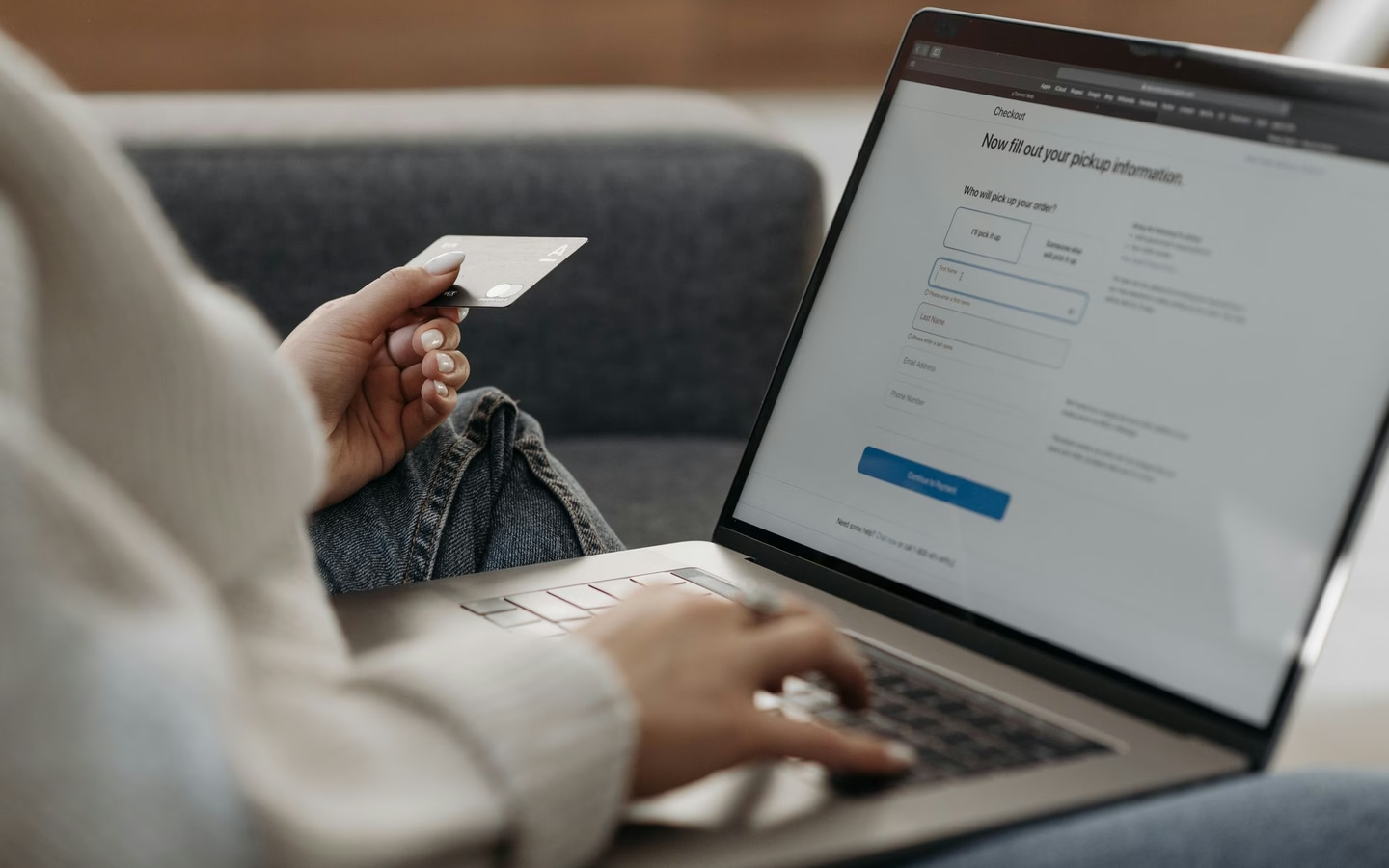
Almost every modern trade-in starts with a self-assessment. You select the product model, answer a few condition questions (does it power on, are there scratches, do you have the accessories), and the system returns an estimated trade-in value.
Three things drive that number:
- Resale demand: what the refurbished version of your product currently sells for
- Condition: graded from "like new" to "defective", usually in 3 to 5 tiers
- Refurbishment cost: what it takes to make the product sellable again
This is why a five-year-old espresso machine from a strong brand can be worth more than a two-year-old no-name model. The quote reflects resale value, not the price you originally paid.
One honest caveat: the online quote is an estimate, not a contract. The final value is confirmed in step 3.
Step 2: Handover
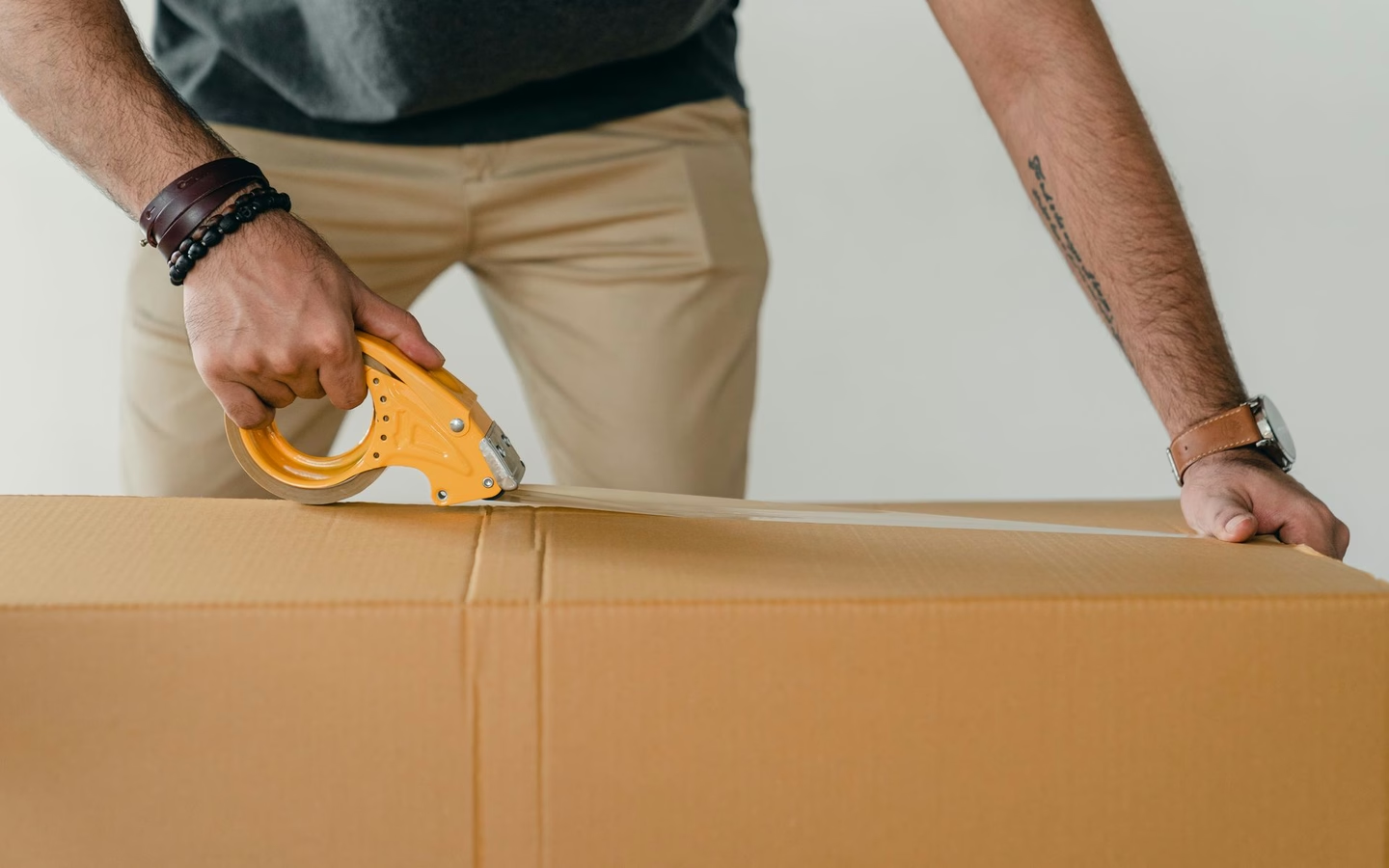
You either print a prepaid shipping label and send the product in, or you bring it to a store or drop-off point. Brands with physical retail often prefer in-store handover because it puts the customer back in the building. Online-first programs rely on shipping.
For you as a customer, this step is mostly logistics. For the company, it is a make-or-break moment: every extra form field, every unclear packaging instruction, every "label arrives within 5 business days" costs conversions. Well-run programs get you from quote to printed label in under five minutes.
Step 3: Inspection and Grading
Once the product arrives, trained staff (or in high-volume programs, semi-automated systems) verify what you described. Does the condition match? Is everything included? The product gets a grade, and that grade locks in the final value.
Two outcomes are possible. If the inspection matches your description, the quoted value is confirmed. If it does not, you receive an adjusted offer, which you can usually accept or decline. In the decline case, the product is shipped back to you for free in most serious programs.
This step is where trust is won or lost. Programs that systematically downgrade products earn one-star reviews fast. Programs that grade transparently, with photos and clear criteria, turn first-time traders into repeat customers.
Step 4: You Get Your Credit
After the grade is confirmed, you receive your payout. Most programs issue store credit or a voucher rather than cash, and that is not an accident: credit keeps the value inside the brand's ecosystem and nudges you toward your next purchase there.
From the brand's perspective, this is the quiet superpower of trade-ins. According to ThredUp's 2025 Resale Report, 47 percent of consumers say they are more likely to make a first-time purchase from a brand that offers trade-in credit, up 25 percentage points from 2023. A trade-in voucher is a discount the customer earned, which makes it psychologically stronger than a coupon.
Step 5: The Second Life
Now the part most customers never see. The traded-in product enters the company's second-life pipeline:
- Refurbishment and resale: functional products are cleaned, repaired, regraded, and sold as refurbished, typically at 20 to 40 percent below new price
- Parts harvesting: products beyond economic repair donate components for refurbishing others
- Recycling: the last resort, where materials re-enter the supply chain
Apple alone sent 15.9 million devices and accessories to new owners through refurbishment in 2024, according to its 2025 Environmental Progress Report. That is not a sustainability side project. That is a sales channel.
Trade-Ins Beyond Cars and Phones
Search for "how do trade-ins work" and you mostly find car dealership advice. But the model has quietly spread to every category where products outlive their first owner:
| Category | Example | How it works |
|---|---|---|
| Furniture | IKEA's Buy-Back program | Customers return furniture for vouchers, resold in the As-Is section |
| Electronics | Apple Trade In | Instant credit toward new devices, old ones refurbished or recycled |
| Home appliances | Dyson Trade-In | Discount on new models in exchange for used machines |
| Coffee machines | Tchibo Refurbished | Used fully automatic machines refurbished and resold with warranty |
The pattern holds for strollers, power tools, musical instruments, and kitchen machines: wherever a product's lifespan is longer than its first owner's usage period, a trade-in captures the gap.
Why Companies Run Trade-In Programs
It is tempting to file trade-ins under "sustainability marketing". The numbers say otherwise. The global recommerce market is projected to reach 210.7 billion US dollars in 2025, growing at over 12 percent annually (Recommerce Market Intelligence Databook, Q2 2025).
For an individual brand, a trade-in program does four jobs at once:
- It creates a margin-bearing resale channel. The brand buys back at trade-in value, refurbishes at scale, and resells with a margin instead of watching eBay sellers take it.
- It triggers the next purchase. The voucher converts an owner into a buyer again.
- It protects the brand in the secondhand market. Refurbished with warranty beats "untested, sold as seen" from a private listing.
- It feeds compliance and circularity goals with auditable take-back data instead of estimates.
The catch: none of this works as a manual process. A trade-in program run on email and spreadsheets costs more than it returns. The economics only turn positive with automated quoting, grading workflows, and routing into the right resale channels. That is the difference between a trade-in form on a website and a trade-in system.
Where Trade-Ins Go Wrong
Both sides of a trade-in can lose value through avoidable mistakes. Knowing them is half the battle.
As a customer, the most common errors are overstating condition and underpreparing the product. If you describe scratches as "like new", the inspection will catch it and your offer drops, often below what an honest description would have earned. Before you ship: clean the product, include all accessories you still have (chargers, attachments, original packaging all raise the grade), and photograph it for your own records. And compare. The same espresso machine can fetch noticeably different quotes from the manufacturer, a retailer, and a specialist platform, because each has a different resale channel behind it.
As a brand, the classic failure modes are different. The first is the quote-to-value gap: an online estimate that gets cut at inspection in most cases trains customers to distrust the program. If your grading regularly disagrees with your quoting, fix the questionnaire, not the customer. The second is voucher design. Credit that expires in 30 days or excludes the products people actually want converts poorly and breeds resentment. The third is treating the returned product as the end of the process instead of the start: without a defined refurbishment and resale path, traded-in inventory piles up as a cost instead of flowing out as revenue.
The common thread: a trade-in is a trust transaction. Every step that surprises the other side, in either direction, takes future transactions off the table.
From Reading to Running One
If you got this far as a customer: check the brand's own trade-in page before you sell privately. The voucher plus the saved hassle often beats the marketplace price difference.
If you got this far as a brand: the process you just read is buildable in weeks, not years, if you do not start from scratch. We wrote down exactly how the economics, the grading logic, and the channel strategy work in practice, based on live programs like Tchibo's refurbished coffee machines.
Download the free Recommerce Whitepaper for the full playbook.