Summary
If you run a brand selling strollers, car seats or kids furniture, your own sales figures probably tell the story: the market for new products is getting tighter. What industry reports mention less often: recommerce, the organized resale of used products, is growing faster in the kids segment than almost anywhere else in retail. This article walks through the market data behind both trends and what they mean for your resale strategy.
The market for new products: down 3.8 percent with no turnaround in sight
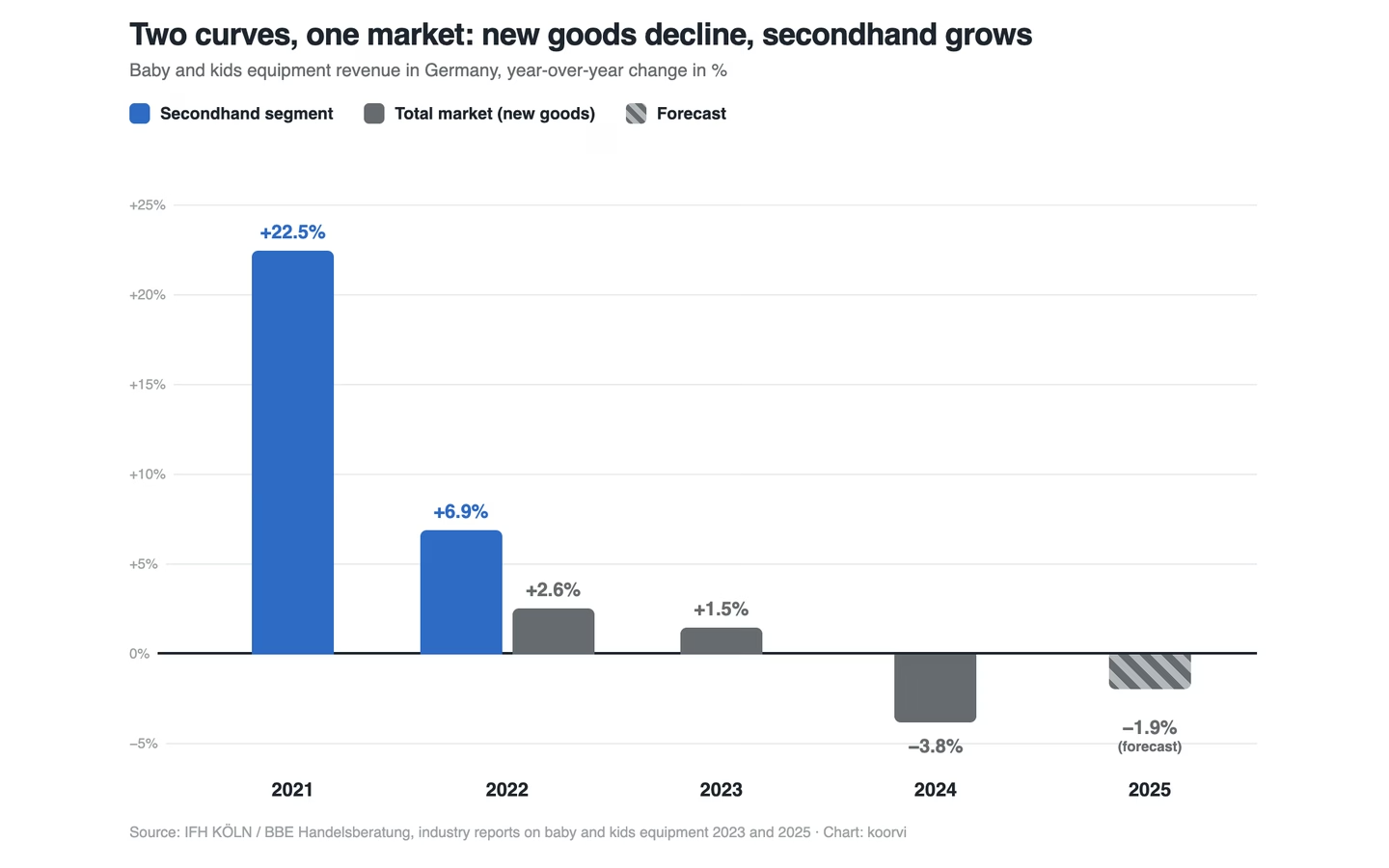
Revenue from baby and kids equipment in Germany fell by 3.8 percent to 7.12 billion euros in 2024. For 2025, the industry report by IFH KÖLN and BBE Handelsberatung forecast a further decline of 1.9 percent to just under 7 billion euros. After that: moderate growth below one percent per year, 0.7 percent until 2029 in the optimistic scenario.
The causes are structural, not cyclical. Annual births in Germany have dropped from 795,000 to 677,000. Add cautious consumer spending across all product groups and growing competition from Asian marketplaces. Anyone waiting for the classic new-goods business to recover is waiting for something the data does not support.
Secondhand baby gear is growing double digits
In the same market, the used segment shows the opposite curve. Revenue from secondhand baby and kids equipment grew by 22.5 percent in 2021 and added another 6.9 percent in 2022 (IFH KÖLN / BBE Handelsberatung). Prof. Dr. Philipp Hoog of BBE Handelsberatung sums up the current situation: online retail already holds a 41 percent market share, and the secondhand market is growing by more than 22 percent annually. His conclusion for retailers: those who offer neither experience nor sustainability will lose.
Looking ahead, the industry expects the gap to widen. Recommerce is forecast to grow 4.4 times faster than traditional retail (Doris Schoger, co-founder of the marketplace Tildi, in toys-kids.de).
Why parents are switching: the math is simple
A full set of newborn equipment cost an average of 3,494 euros in 2022, roughly 300 euros more than in 2020 (IFH KÖLN). At the same time, kids gear has a characteristic almost no other category shares to this degree: product lifespan far exceeds usage time. A stroller lasts ten years but gets used for two. A high chair outlives three children.
Search behavior confirms the shift. In Germany alone, terms like "kinderwagen gebraucht" (used stroller) reach around 5,000 monthly searches, and queries for used baby clothes and secondhand baby gear stay consistently high across markets. Parents have already made their decision. The only open question is who they buy from.
Third parties are filling the gap right now
Because most manufacturers and retailers offer no channel for used products, an ecosystem of third parties has emerged. Munich-based marketplace Tildi sells secondhand items, returns and B-stock from more than 60 commercial sellers and lets parents trade in products their kids have outgrown. Platforms like relend and hey little bring rental and buy-back models into specialist retail. On top of that sits the enormous peer-to-peer market on Vinted and classified platforms.
Every one of these transactions involves your products, your brand and your customers. Just without you. Jesper Frandsen, founder of relend, puts the flaw of the classic model simply: a product can only be sold once. Brands that leave the secondary market to others give up every further transaction in the product's life cycle.
Branded resale: what brands actually gain
An own resale program, often called branded resale, flips that logic. Instead of watching, you take back three things.
Margin from the secondary market. Through a trade-in program you take products back, refurbish them and resell them with a quality promise. The spread between buy-back price and resale price belongs to you, not to eBay.
New customer groups. Refurbished offers reach parents who cannot or do not want to pay full price. They enter your brand world as secondhand buyers and often stay as full-price customers later.
Regulatory readiness. The EU Ecodesign Regulation introduces a destruction ban for unsold goods plus reporting duties on material use and waste. Circular economy practices are shifting from a sustainability topic to compliance. A working take-back system answers both at once.
Why almost nobody does this in-house (and how it works anyway)
The honest reason most brands still have no resale program: it is operationally demanding. Take-back, quality checks, refurbishment, logistics and a second storefront amount to a business model of their own. Few companies have managed to run a take-back system profitably on their own. Which is exactly why the industry sees a strong trend toward partnerships: brands and retailers increasingly look for partners who run the recommerce business in their name (toys-kids.de).
That is the core of resale as a service: you keep your brand, customer relationship and pricing control, while a partner provides the software, trade-in portal, refurbishment and fulfillment. You can start without your own warehouse or a new team, and the model works with your existing refurbishment or logistics partners if you have them.
Conclusion: the demand exists, the channel is missing
The kids equipment market is not shrinking because parents need less. It is shrinking because a growing share of demand flows into the used market, and that market currently operates almost entirely without the brands. The data is unambiguous: minus 3.8 percent for new goods, double-digit growth for secondhand, a factor of 4.4 in the forecast.
The next step is not a leap of faith, it is arithmetic: what is the secondary market of your products worth, and how much of it do you want to capture? If you want to run those numbers for your product range, talk to us. koorvi builds resale programs for brands with higher-value products, from trade-in to multi-channel resale.