Summary
Few product categories hold their value like audio. Flagship headphones still fetch 75 to 90 % of their retail price after one year, and tube amplifiers keep up to 85 % even after five. Yet almost the entire trade in refurbished headphones and used hifi gear happens without the manufacturers: on eBay, Audiogon, Head-Fi and classified ads. In this article, we look at what the resale data reveals about the home audio market, why the category is practically designed for branded resale, and which brands are already moving.
The used audio market is thriving, just not for brands
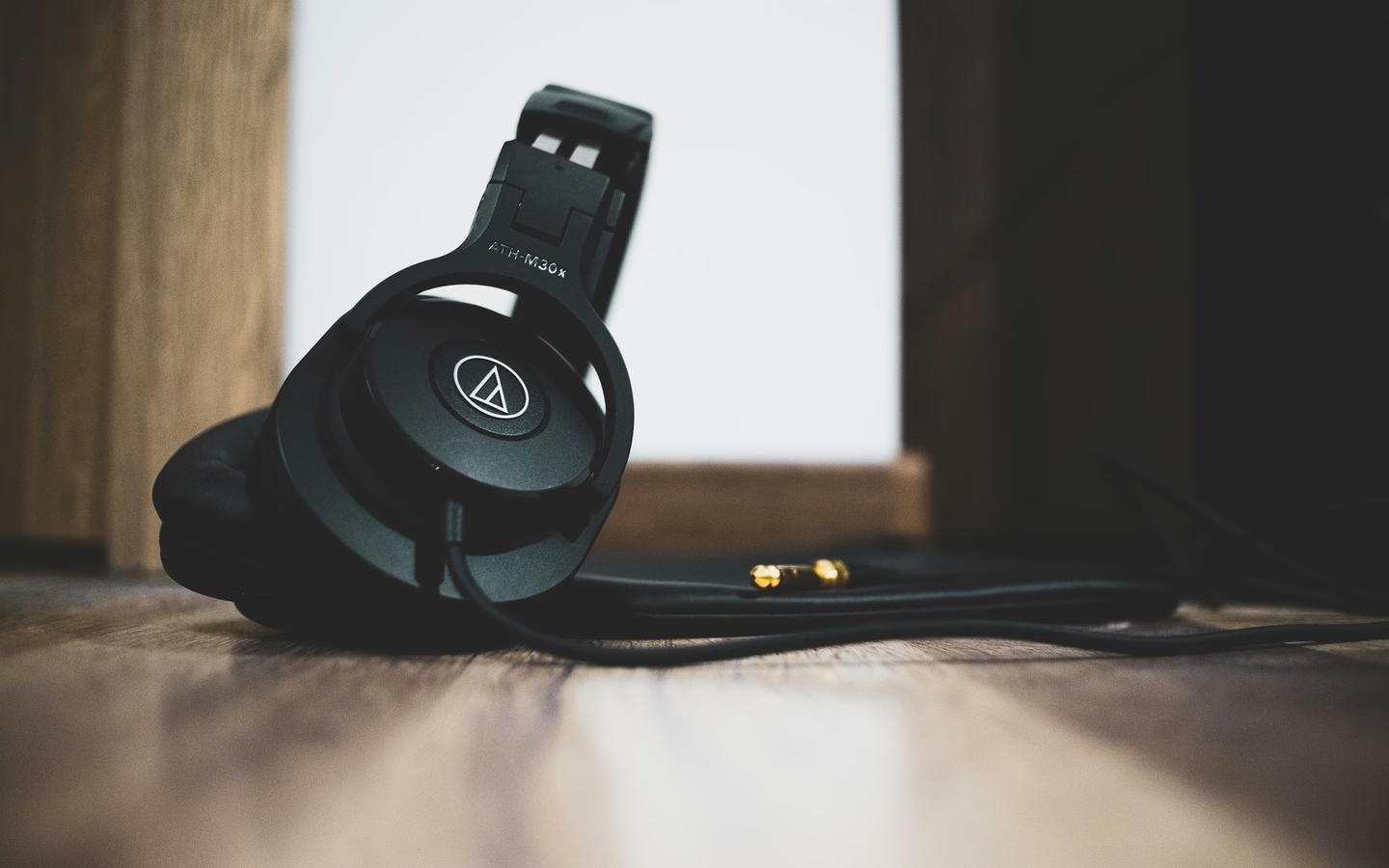
The secondary market for audio already works. It just doesn't belong to anyone who makes the products. Audiogon, Head-Fi's classifieds and eBay handle the bulk of high-end audio resale, with stable prices and a buyer base that knows exactly what gear is worth. In Germany, Europe's largest audio market, the dedicated used-hifi exchange audio-markt.de alone draws around 27,000 direct searches per month (DataForSEO, June 2026).
Every one of those transactions sends margin, customer data and the second-owner relationship to platforms and private sellers instead of the brand. It is the same pattern we have seen in other categories: resale is running, manufacturers are watching. We broke down how that changes for e-bikes. For audio, the starting conditions are even better.
What the resale data shows: audio holds its value
An analysis of 2024-2025 sold listings on Audiogon, eBay and Head-Fi (Headphonesty, February 2026) shows how differently audio products depreciate. The figures are median sold prices relative to original MSRP:
| Category | Value after 1 year | Value after 3-5 years |
|---|---|---|
| Tube amplifiers | 80 to 90 % | 65 to 85 % |
| Flagship headphones | 75 to 90 % | 65 to 80 % |
| High-end wired IEMs | 65 to 90 % | stable for limited runs |
| Mid-range headphones | 60 to 75 % | 50 to 65 % |
| True wireless earbuds | 40 to 60 % | 25 to 40 % |
For perspective: a new car typically sheds about a quarter of its value in year one, smartphones often more than half. Premium audio plays in a different league. That value retention is the foundation of every profitable resale program: the more residual value a product carries, the more margin survives refurbishment, logistics and platform fees.
The market is also moving upmarket. According to Mordor Intelligence, the segment above USD 1,000 is the fastest-growing price bracket in audio through 2031. More capital in the product means more substance for a second life.
Why audio products are built for resale
In our Recommerce Playbook, we defined what makes a product a strong resale candidate: high unit value, repairability, reliable testability, available spare parts and a secondary market with stable pricing. Home audio ticks all five boxes, more clearly than most categories.
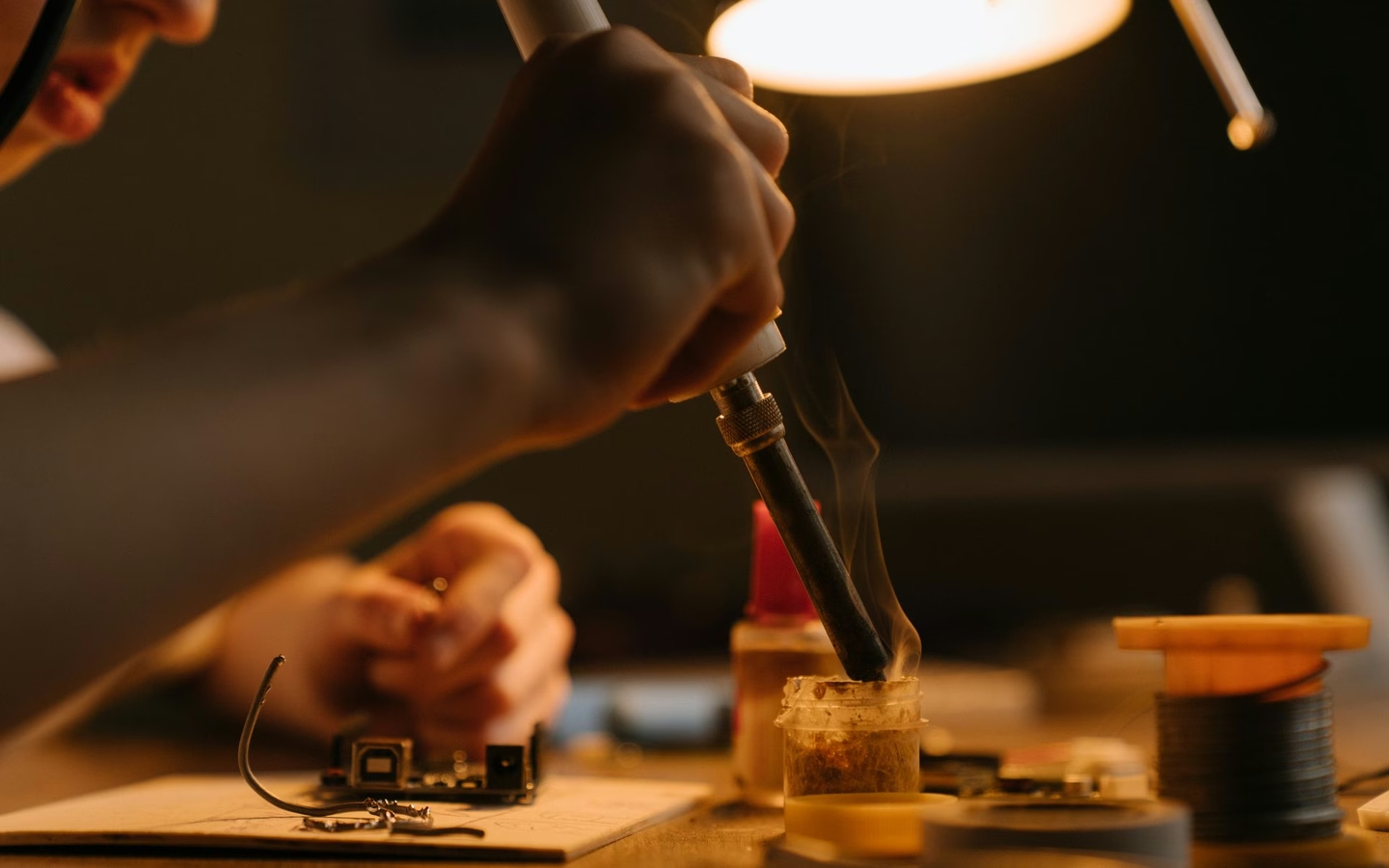
Lifespan beats usage time. A quality headphone or amplifier lasts 10 to 20 years. Owners still upgrade every few years, because upgrading is part of the hobby. That gap between product lifespan and usage time is the raw material for trade-in and resale.
Repairability is built in. Pads, cables, headbands and tubes are wear parts that can be replaced cheaply and predictably. That makes refurbishment easy to calculate: the per-unit effort is small relative to the residual value.
Slow product cycles. Flagship models often stay current for five years or more. There is no annual refresh crushing used prices overnight. Second owners know exactly what they are buying.
Brand prestige carries the price. Established audio brands behave like collectibles on the used market: reputation and scarcity keep demand high, sometimes for decades.
One honest caveat: true wireless earbuds with sealed batteries are weak resale candidates. An audio resale program starts with over-ears, amplifiers and speakers, not earbuds. That product selection is step one of the playbook: start narrow, with the right products, then scale.
Which audio brands already do resale
The demand for manufacturer-certified used gear is measurable. In Germany alone, "sonos refurbished" is searched around 1,600 times per month, five times more often than the generic term for refurbished headphones. People want to buy used, but with a brand's word behind it.
Some manufacturers already serve that demand. Sonos sells certified refurbished devices with warranty in its own store. Bose runs a refurbished program through its outlet channel. Teufel markets B-stock directly through its own shop. And Bang & Olufsen refurbishes selected classics in its own factory and relaunches them.
What is striking is what's missing: a consistent trade-in program that actively pulls devices back instead of waiting for returns and B-stock to pile up. Whoever controls the return channel controls supply, pricing and the customer relationship in the secondary market. Tchibo's buy-back program for coffee machines, built on koorvi, shows the exact pattern that works for audio too.
What this means for your brand
If you run product, e-commerce or circularity at an audio brand, the math is simple: your products hold their value, the used market demonstrably exists, and demand for branded refurbished is measurable. The three input streams for a resale program are probably already in your building: returns, B-stock and (once you offer it) trade-ins.
What most brands lack is not the product but the operations: intake, diagnostics, grading, refurbishment, pricing and multi-channel resale as one connected system instead of a spreadsheet process. That is exactly what Resale-as-a-Service provides: software, refurbishment partners and consulting in one setup, without building your own reverse supply chain.
The second-hand market is running. The question is, through whom?
Audio is one of the few categories where the used market doesn't need to be built. It is there, liquid and growing. The only open question is whether brands keep leaving it to platforms and private sellers, or run it as their own margin and retention channel.
Want to know if your products qualify for a resale program? The Circularity Check gives you an honest assessment in a few minutes. If resale doesn't make sense for your brand, we'll tell you that too.