Summary
Why recommerce matters now
Recommerce delivers three direct business outcomes. It enables value recovery instead of write-offs (returns/B-stock become revenue again). It creates additional touchpoints through trade-in and vouchers and brings customers back into your own shop. And it secures ownership of the secondary market: quality, pricing, and warranty sit with the brand,not with platforms.
Why is this taking off so strongly right now? Because the market is actively pulling in this direction. Trust is there: around one in three Europeans has already bought refurbished electronics, and younger buyers see “pre-owned” as smart, not second-hand. The scale fits too: the global second-hand market is worth over USD 520 billion. And in the end, it’s not novelty that wins—it’s value. Price remains the most important factor for many, making high-quality, fairly priced second-life products increasingly attractive. That’s why leading brands are bringing recommerce in-house and reclaiming their products, brand, and customer relationships.
Refurbishment as a real margin lever
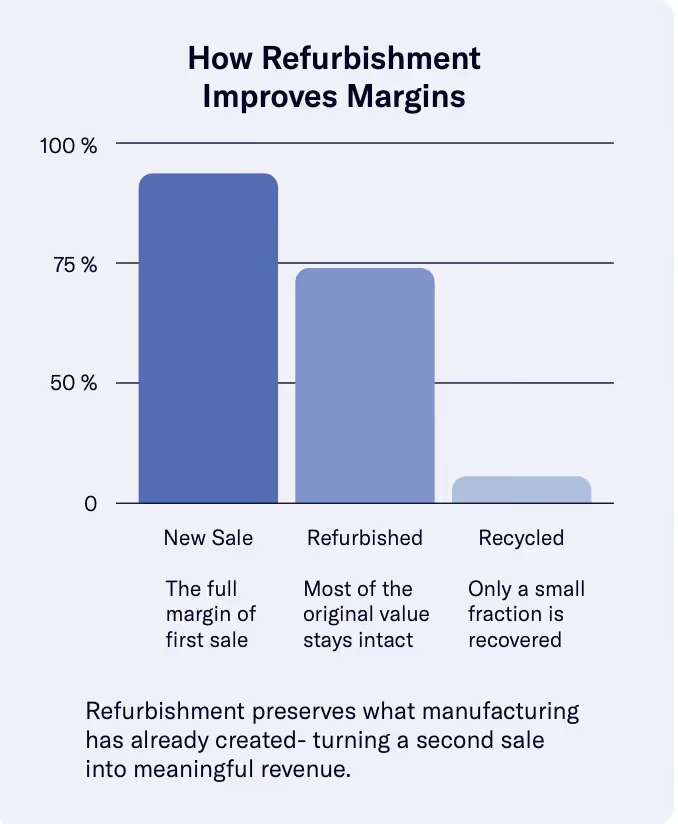
Refurbishment is the most efficient way to preserve the economic value already built into a product. The difference to recycling is clear: recycling destroys structure, refurbishment preserves it.
A new product captures 100% of its margin potential. Refurbished products often still retain around 65–80%, because core components and manufacturing effort have already been “paid for.” Recycling, by comparison, recovers less than 10% once products are reduced to raw materials.
Refurbishment also improves the cost side: fewer write-offs, less liquidation, and less replacement with new units or parts. That makes refurbishment a profit lever not a sustainability expense.
Case: koorvi × Tchibo
Tchibo has integrated recommerce into its own portfolio: digital take-back + voucher + refurb + resale for coffee machines as a brand-controlled extension of its product offering.
How the recommerce process at Tchibo works today
From the first click to resale, Tchibo’s setup runs today as an end-to-end process – and we at koorvi are the digital layer that holds it together, steers it, and makes it visible.
Customers start in the take-back portal. The entry is intentionally low-friction: the return is initiated in just a few steps – and this is exactly where we at koorvi come in. Every return is created digitally right away, so from minute one it’s clear what is coming back, where it is, and what the next step needs to be. No email back-and-forth, no “we’ll take a look,” but a clean, trackable starting point.
Once the machine is in the process, we at koorvi take over unit-level steering. Each individual unit runs as its own record with a clear status path – from return to diagnostics and repair to grading and resale. This solves the whitepaper core issue of “fragmented infrastructure” exactly where it otherwise hurts: at handovers. Instead of coordinating manually, we at koorvi ensure transparent handovers, clear responsibilities, and a traceable audit trail. Result: less coordination effort, better planning, faster turnaround times.
The scaling lever: standardization
In the refurb step, established repair partners recondition the units – cleaning, repair, testing, QA. We at koorvi don’t “turn the screwdriver,” but do what enables scaling: we ensure the process runs in a standardized way and that the relevant information per unit is documented cleanly. That turns QA into a repeatable standard instead of “craftsmanship by gut feel” – and that’s exactly what keeps quality stable as volume grows.
At the end, we at koorvi push the units into the resale channel: the Tchibo Refurbished Shop. There, the devices are offered with clear condition logic (“very good”/“good”), transparent criteria (e.g., usage limits), and a 24-month warranty plus return policy. That’s not just a strong customer promise – operationally, it’s the key against the whitepaper bottleneck quality consistency. Because the condition isn’t described “somehow,” but comes from a clean process, resale remains controllable, scalable, and brand-aligned for Tchibo.
“With this program, we’re proving that sustainability doesn’t have to be a cost – it can be a driver of circular business models and long-term value creation.” Kristina Kölling, Head of Environment and Circular Economy at Tchibo
Success factors
For recommerce to truly scale, it needs a setup that reliably covers five things: coordinated reverse logistics so returns are routed quickly, predictably, and cleanly. Consistent QA so condition, testing, and grading don’t depend on the partner or site. Full data transparency so it’s traceable per unit what happened – from return reason to repair costs to resale performance. Automation to reduce manual administration at handovers and shorten turnaround times. And compliance-ready documentation so warranty, safety, and repair records are always provable and recommerce doesn’t fail due to reporting or liability questions.
Which products is it worth it for?
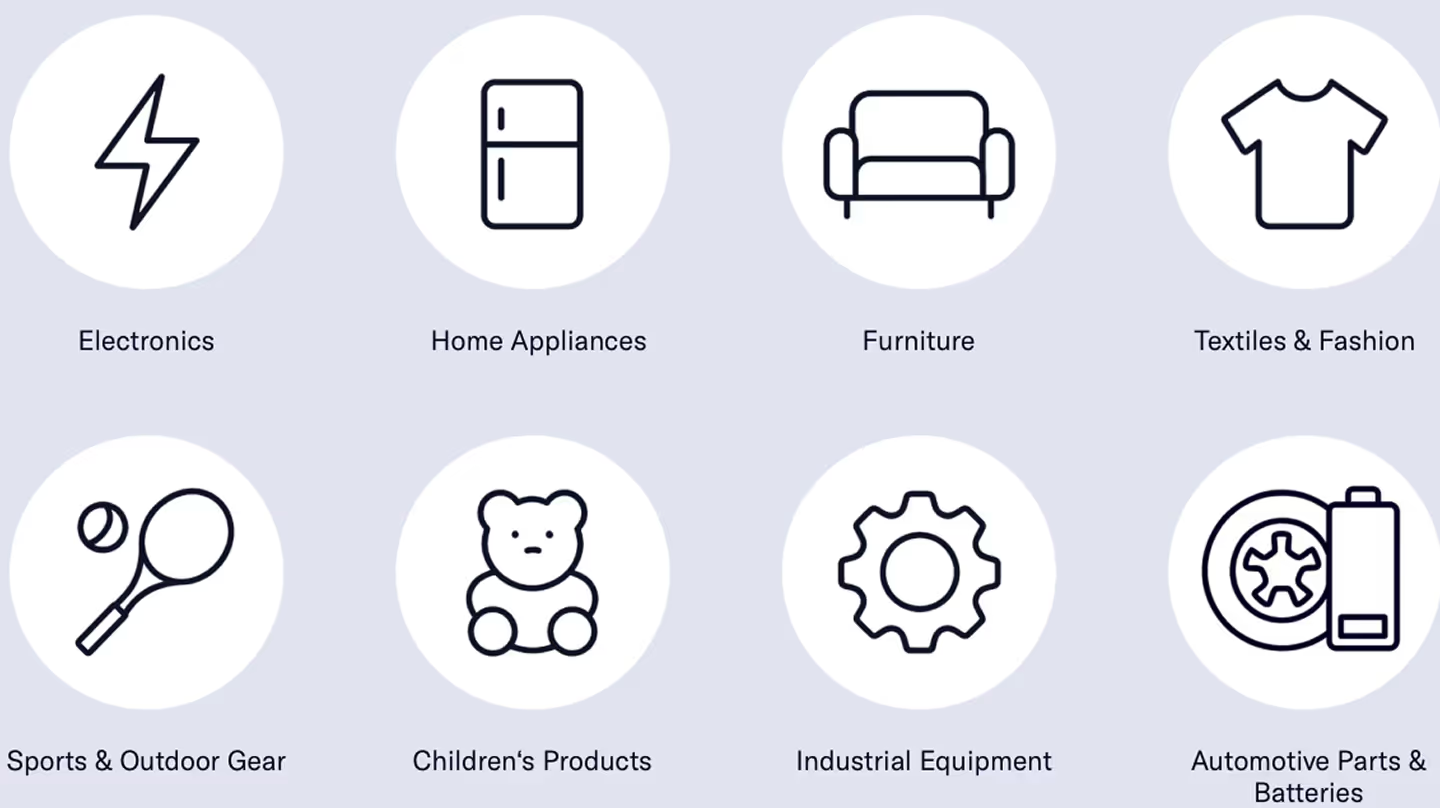
Recommerce is gaining traction across more and more categories. Particularly strong are electronics and home appliances (high residual value), followed by furniture and fashion. Sports & outdoor as well as children’s products are also growing quickly (short usage phases). In B2B, industrial equipment as well as automotive parts and batteries are becoming more important –mainly driven by cost pressure and the need for circular sourcing. Want to start your own recommerce program? With koorvi, we implement your branded resale.
Read the whitepaper: understand recommerce from A to Z
When developing the whitepaper, we made sure to create a complete overview of recommerce: you get the most important numbers on profitability (why refurb/resale almost always beats recycling), the key success factors and typical launch mistakes – plus market and regulatory context. You can get to the whitepaper directly here.