Summary
Over 2 million E-Bikes sold per year meet a growing stream of returns from leasing and trade-ins. Platforms are already monetizing this flow. This is exactly where a scalable revenue channel emerges.
Why are so many E-Bikes resold second-hand?
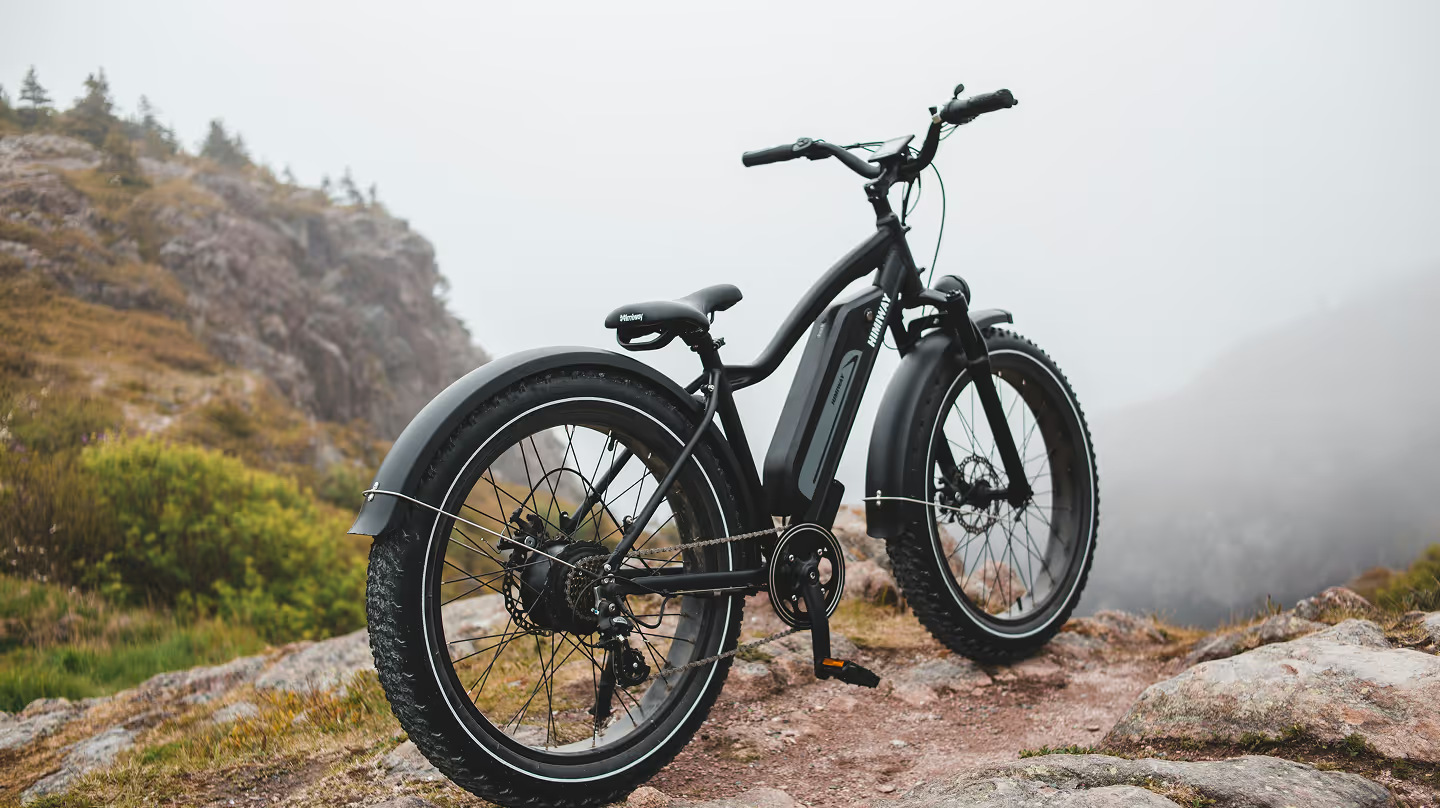
Germany is one of the largest E-Bike markets worldwide but still lags behind countries like the US or the Netherlands in the refurbished segment. There, second-life models and refurbishment platforms are already more established. At the same time, Germany is catching up quickly, mainly driven by the growing leasing market and increasing returns. The foundation is clear: Germany is a cycling market, and E-Bikes have long become a central part of it. More than 17 million E-Bikes are already in circulation, with around 2 million new ones added each year. At the same time, bicycles are increasingly used in everyday life, for commuting, leisure, and as an alternative to cars.
As a result, not only adoption increases, but also usage intensity. E-Bikes are used more frequently, replaced faster, and upgraded more often. This creates a structural effect: products do not stay with their first owner. After about 2 to 4 years, they return to the market and form the basis for a growing second-life and refurbishment market.
How E-Bikes are sold second-hand today
Peer-to-peer platforms dominate (buy a used E-Bikes)
The second-hand market for E-Bikes is already structured. A large share still runs through peer-to-peer platforms. Customers who want to buy a used E-Bike go to platforms like eBay. Price is the main driver. Quality standards are missing, brands hardly matter, and price pressure increases quickly. Your product becomes interchangeable—a commodity in the market for used E-Bikes.
Refurb platforms scale (buy a refurbished E-Bikes)
At the same time, a second, more structured system is emerging: refurbishment. Providers like Rebike buy bikes from leasing, retail, or private sellers, inspect them technically, replace worn parts, and bring them back to market with a warranty. This is how a refurbished E-Bike works: acquisition, inspection, refurbishment, resale. The result is clear, more trust, higher prices, and a scalable model. This is where the actual E-Bike refurbishment business model emerges.
Leasing drives the market (buy a ex-lease E-Bikes)
Programs like Jobrad ensure that large volumes of bikes return after two to three years. These returns are often in good condition and provide consistent supply. At the same time, demand is shifting: more customers are actively looking for lower-cost alternatives.
Retail is catching up (buy a refurbished E-Bikes in Germany)
Retail is also adapting. Retailers integrate second-life offerings, such as Decathlon, build their own programs, or collaborate with partners. Refurbished E-Bikes are no longer a niche, they are becoming an established part of the market.
How does a refurbished E-Bike work?
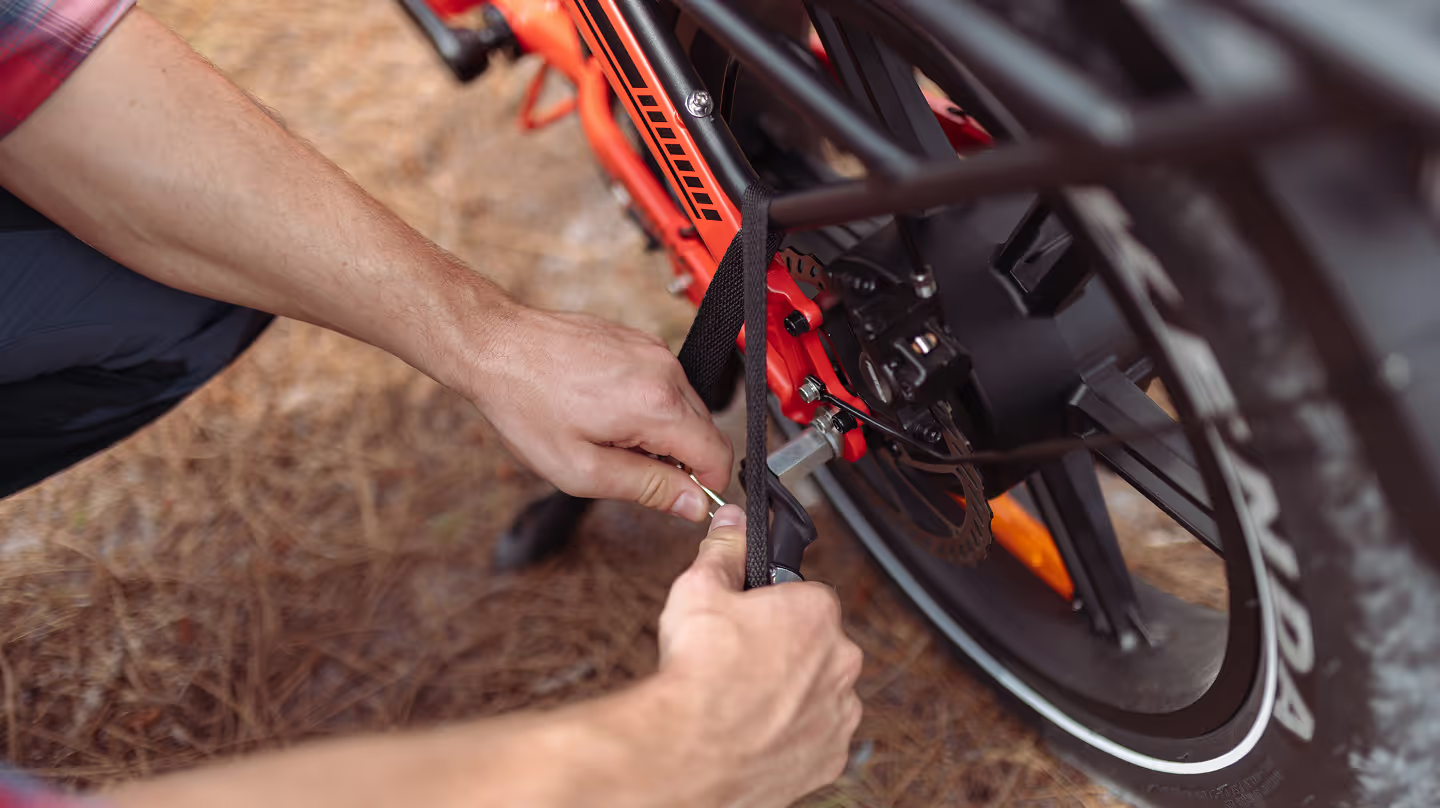
A refurbished E-Bike is not a typical used product, but a controlled, reconditioned bike in its second lifecycle. It is inspected, repaired, and brought back to market with clearly defined quality standards—often including a warranty. What matters is not just the product, but the process behind it.
1. Intake & evaluation
The process starts with structured intake. Condition, mileage, and model are assessed to determine value and required effort.
2. Technical check
Next comes the technical inspection. Battery, motor, and electronics are tested, especially battery capacity, which directly impacts resale value.
3. Repair & replacement
Defective or worn parts are replaced. This includes brakes, wear components, and if needed, the battery. The goal is a fully functional product.
4. Quality control
Before resale, the bike is checked again and classified, for example into Grade A, B, or C. This creates transparency for the buyer.
5. Resale with warranty
Only then does the bike return to market, with a warranty and a clearly defined quality promise. This standardized process is where trust is built. And where margin is created.
How does the recommerce E-Bike market become profitable?
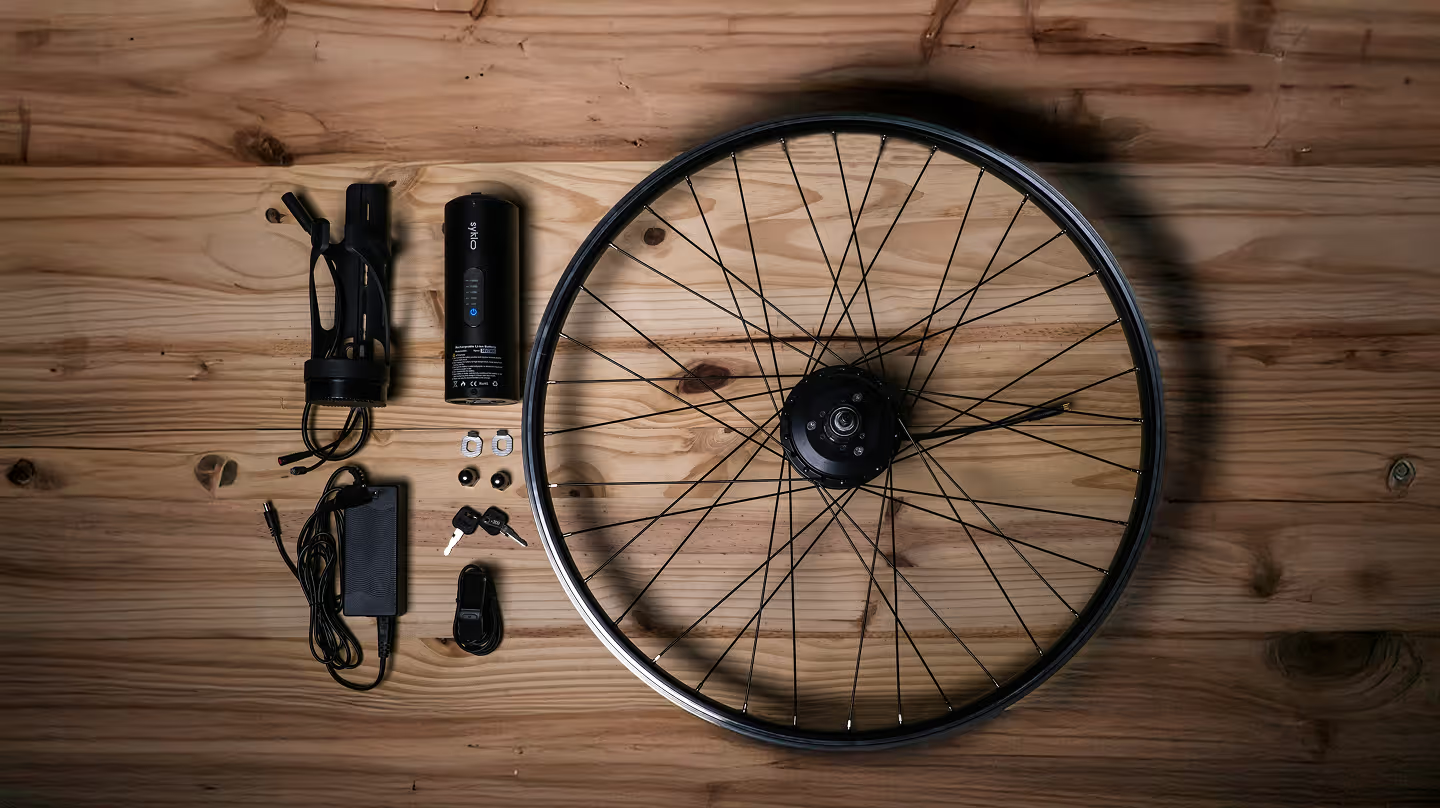
Profitability is not driven by the individual bike, but by the system behind it. Refurbishment shifts the focus away from a one-time sale toward a model that generates revenue across the entire product lifecycle. An E-Bike is no longer monetized once, but multiple times. Resale margins are the entry point. Refurbished bikes are positioned 20–40% below the original price, yet remain profitable due to controlled sourcing and standardized refurbishment. Spare parts expand the model. The battery in particular drives value. With €400–900 per replacement, it creates an additional revenue stream independent of the initial sale.
Which levers make refurbishment scalable?
Service and maintenance turn this into a recurring business. Every bike in circulation creates new touchpoints and ongoing revenue instead of one-time transactions.
Warranties and add-ons increase trust and willingness to pay. Customers accept higher prices when quality and reliability are clear. Trust translates directly into revenue.
Take-back programs connect all elements. They bring products back into the system and create new customer touchpoints—the foundation for repeat purchases and long-term relationships.
Only when these levers work together does a scalable system emerge. This is how a single sale becomes a recurring business model in reverse logistics.
Refurbished E-Bike experiences: is it worth it?
Refurbished E-Bike experiences are largely positive, as buyers receive verified quality at a significantly lower price. Offers with warranties and clear quality checks perform particularly well because they reduce uncertainty and increase trust. For retailers, this creates a clear advantage. Trust becomes a differentiator. While price dominates the traditional used market, refurbishment enables controlled quality and more stable margins. At the same time, purchase intent increases because risk is reduced. This reveals a key lever: those who systematically build trust can not only sell better, but also command higher prices and move away from pure price competition.
Your playbook: control the second life
The leverage lies in a structured system: organize take-backs through leasing and trade-ins, define a standardized refurbishment process, and build a dedicated second-life channel. Combined with clear pricing logic and extended customer journeys, this creates a recurring business model instead of a one-time sale.
This is exactly where koorvi comes in: building systems that take products back, refurbish them, and bring them back to market, scalable and under your control. koorvi helps structure and operationalize the entire second-life process efficiently and economically.