Summary
Since 1 January 2022, every B2B electrical equipment manufacturer in Germany has had to file a take-back concept with Stiftung EAR. Most brands signed a service contract with Lightcycle, PreZero, or take-e-way and called it done. That is compliance. It is not a business.
Meanwhile, a significant share of your devices is already being resold, just not by you. Refurbishers, eBay power sellers, and specialised marketplaces live off the fact that manufacturers leave the aftermarket untouched. This article shows how that same obligation becomes a resale program that delivers margin, restores brand control, and prepares you for the EU regulation of the next few years. With concrete examples from the small-appliances vertical, where we currently operate.
Why the refurbished market for home appliances already exists (just without you)
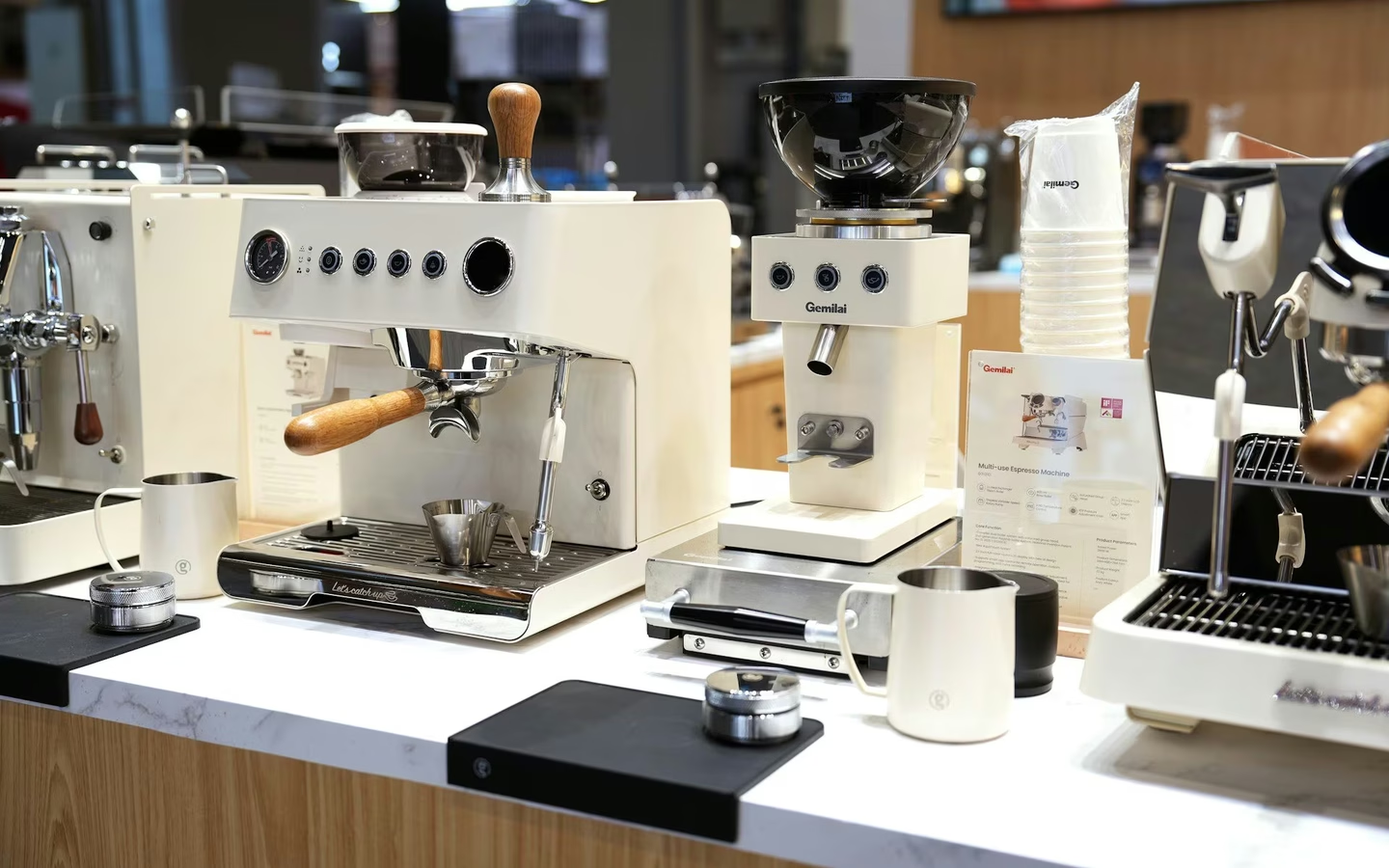
Search eBay for refurbished Jura, DeLonghi, Siemens, or Bosch espresso machines. You will find four-figure listings, with warranties between 12 and 24 months, sold commercially, with none of those brands earning a cent. Specialists like kaffeerefurb.de built their business on that gap. They buy broken machines, repair them, and sell them under their own logo. The brand only appears as a search term in the listing.
This is not limited to coffee machines. Robot vacuums (iRobot, Dyson), kitchen machines (KitchenAid, Bosch), air fryers (Tefal, Philips), and stand mixers all run through the same mechanic across Europe: the manufacturer sells the device once, then third parties take over the rest of the lifecycle. The second sale brings nothing back to the brand.
That is the baseline. Resale is already happening. You are just not part of it.
What § 7a ElektroG actually requires, and what it allows
Short version: the law requires you to let commercial end customers return their old devices free of charge. It does not tell you what to do with the devices afterwards. That gap is the lever.
Specifically, § 7a requires B2B equipment manufacturers to submit a take-back concept with every registration and to prove how they meet their take-back obligation. § 19 prescribes reasonable return options. For B2C devices the mechanism differs: municipal collection points handle most of the volume, but voluntary self-take-back has actually been simplified since 2022, because the notification requirement for own take-back systems no longer applies to manufacturers who do it voluntarily.
What most brands did with this: signed a service contract that covers the obligation and routes devices into the recycling stream. Shredding, material recovery, quota met.
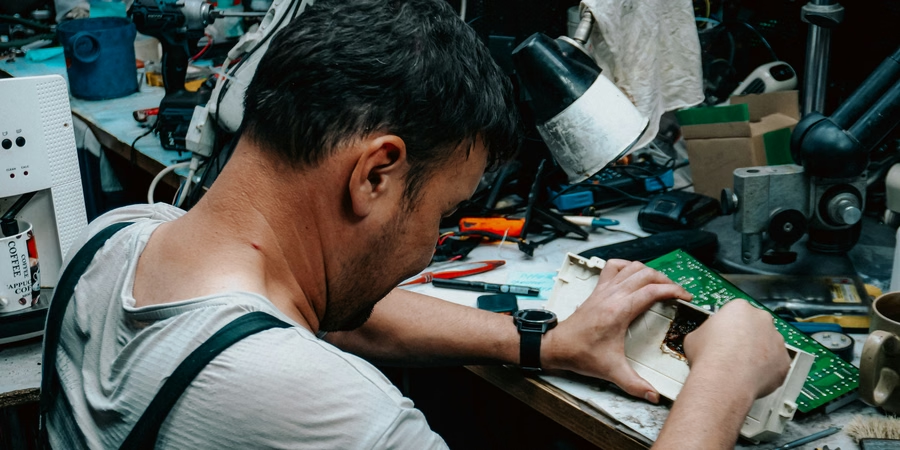
What you can do with it: turn the same take-back into the first step of a refurbishment program. Functional or repairable devices skip the shredder and go into refurbishment instead. Material recovery becomes the exception for irreparable units, not the rule.
Note: The legal mechanic is robust, but before signing a concrete setup plan, manufacturers should validate EAR compliance of their resale path with a specialist advisor like take-e-way or directly with Stiftung EAR.
Three inbound streams for resale: returns, B-stock, trade-ins
A resale program lives and dies by what comes in the back door. For home appliances, three inbound streams feed a program. Most brands already have at least two of them in-house, without treating them as a resale asset.
Returns. For e-commerce-driven brands, the largest pool. Devices that were opened, briefly used, or returned unopened currently end up as job lots with wholesalers, in outlets, or worst case in recycling. Margin gets handed away multiple times: once to the wholesaler, once to the end customer who resells the device through a third party. The same return marked as refurbished and sold through your own channel keeps the value chain inside the brand.
B-stock. Devices with cosmetic defects, faulty production batches, showroom units from retail partners. Today usually sold off through internal B-stock platforms or external clearance traders, often anonymised without brand reference. With a resale setup, this becomes a curated second product line under your brand.
Trade-ins. End customer returns an old device and receives a voucher or discount on a new one. Benefits: locks in existing customers, generates a new purchase, delivers a clean inbound stream. Works particularly well for long-lived devices with a clear upgrade path, like espresso machines, kitchen machines, robot vacuums.
What koorvi does with multi-channel resale. Once devices come out of refurbishment, they need to sell. We run a storefront for our brand customers under their own brand, plus connections to multi-channel outlets like refurbed, Back Market, eBay, and generalists, depending on brand strategy. Premium brands often run the own storefront as their primary channel with reduced marketplace exposure, to avoid pricing erosion on the new product. Volume brands go earlier and broader on marketplace coverage. Which setup makes sense for you depends on the assortment, your pricing power, and the channel mix you run on the new product.
What sets the small-appliances vertical apart from white goods
Short version: logistics costs, repair depth, and margin structure are different enough that the two clusters should be treated as two separate businesses operationally, even though both fall under "home appliances".
For small appliances (espresso machines between 300 and 1,500 euros new, kitchen machines, stand mixers, robot vacuums), shipping works like consumer electronics. Parcel service, small packaging, low return shipping costs. Refurbishment is usually a question of cleaning the brewing unit, replacing seals, descaling the water path, software reset. Margin per refurbished unit: 30 to 60 percent of sales price with clean process design.
For white goods (washing machines, fridges, dryers, dishwashers, 500 to 2,500 euros new), logistics is the bottleneck. Freight shipping, often two-person delivery, high return shipping costs. Refurbishment depth varies widely, from drum replacement to full inverter repair. The economic sweet spot sits with devices under three years old with concrete repairs, not with full overhaul of arbitrary old units.
For brands, this means: you launch a program for a small-appliances line within weeks. A white-goods program needs a logistics partner with freight coverage and much sharper pricing per SKU. Both models are doable. They are not the same.
Note: The margin range is a heuristic from multiple setups in the small-appliances vertical. Before any investment decision, run an SKU-specific business case.
How a program for small appliances actually runs: the Tchibo Refurbished case
In June 2025, Tchibo Refurbished launched, a buy-back portal for used Esperto Caffè full automatic espresso machines (first generation). koorvi operates the program end-to-end. We provide the platform for buy-back and sale, handle the full refurbishment of devices through our partner network, and run the shipping logistics in both directions. Tchibo retains full brand authority over pricing, communication, and warranty promise, without building its own refurbishment capacity.

How it runs operationally: end customer starts the buy-back process via the Tchibo portal, enters model and condition, gets a preliminary offer. Machine ships in, gets inspected in our refurbishment operations, is reassessed if needed and refurbished. Acceptance criteria are communicated transparently, including a maximum of 4,000 brew cycles, devices must arrive dry and cleaned. After refurbishment, the resale runs via the Tchibo Refurbished storefront with 24-month warranty and 30-day right of return, technically and logistically on the koorvi platform.
What matters here for the brand: Tchibo Refurbished looks like Tchibo. No white-label marketplace vibe, no third-party logo. Circularity manager Karoline Reperich reports dynamic demand at both ends of the pipeline just months after launch, on the buy-back side as well as the sale of refurbished devices. Andrea Schneller, CEO of koorvi, frames the program promise like this: circular economy made simple, scalable, and profitable.
That is exactly the point for you as a manufacturer. You decide on brand, pricing, and channel strategy. The operational setup, from return through to refurbished resale, comes from koorvi and our partners. We have outlined a comparable setup for Panasonic, for brands whose logistics profile sits closer to white goods.
What you need before you start
Before going into detailed planning, you need answers to four questions.
1. Which SKUs make sense? Not every device has a second life that holds up economically. Rule of thumb: new value from around 250 euros up, predictable repair depth, secured spare parts supply. For a small-appliances brand this often means the top-30 best-selling SKUs, not the entire portfolio.
2. Who handles the refurbishment? Three options: your brand's existing repair partner, an external specialist refurbisher, or a platform like koorvi that handles refurbishment via our partner network. The last is the fastest path for most brands, because no in-house operations need to be built.
3. Which channels fit your brand? Premium brands often run an own storefront with limited marketplace visibility, to avoid pricing erosion on the new product. Volume brands move earlier to multi-channel.
4. How do you measure success? Common KPIs: take-back conversion per marketing touchpoint, average buy-back price vs. resale price, time-to-restock per SKU, CO2 savings per unit, repeat purchase rate after trade-in. Define KPIs early or you will optimise the wrong lever later.
If you want to go deeper into the operational mechanics, especially around returns as an inbound stream: our Recommerce Playbook: From Returns to Revenue walks through the setup steps in more detail, including example margin calculations.
What comes next
Resale for home appliances is not an ESG add-on and not a refurbished listing on someone else's marketplace. It is a standalone channel that translates the same obligation that has been sitting on you since 2022 into margin and brand loyalty. The brands that set this up in the next 24 months will own their aftermarket. The rest will keep handing it to third parties.
Two ways forward: if you want to start from where your business is today, take the Circularity Check and you get an assessment in a few minutes. If you want to know directly what a program would look like for your specific product line, with a concrete setup timeline, margin model, and channel strategy: talk to us. We turn that into a first business case in 45 minutes.