Summary
In the Swedish city of Eskilstuna, used products are systematically collected, repaired, and resold. The result: more than 50 new jobs, millions in revenue from second-hand goods, and a functioning retail model for the circular economy.
What is ReTuna and why is it relevant?
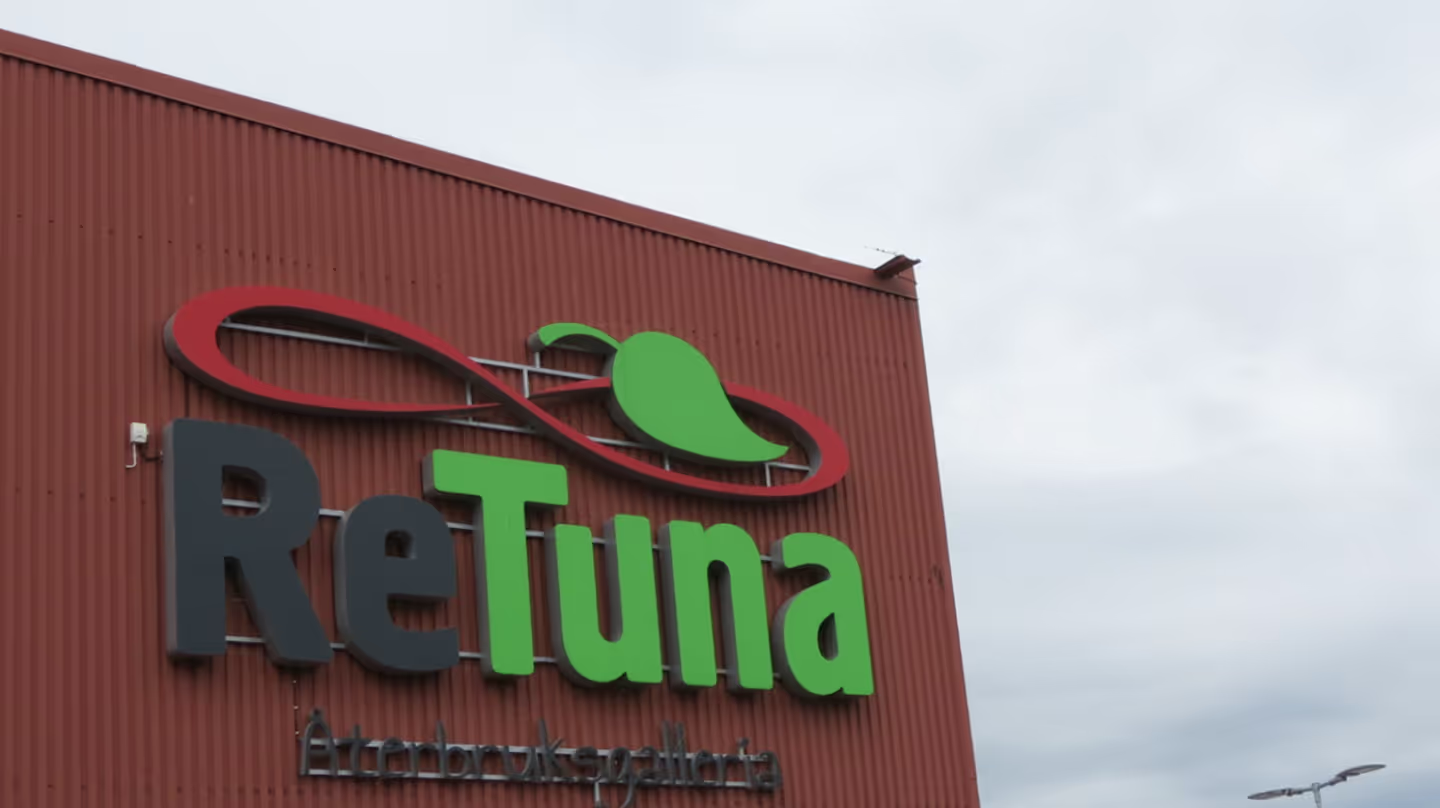
The ReTuna Återbruksgalleria in Eskilstuna was created from the idea of viewing recycling not just as a disposal process, but as an economic opportunity for reuse. The city of Eskilstuna already had a municipal recycling center where citizens could drop off their discarded items. However, a recurring pattern became clear: A large portion of the products being handed in were still functional or could be reused with minimal effort. Despite this, many of these items were either recycled or disposed of because there was no structured infrastructure to systematically bring them back into the market.
Against this backdrop, the city developed a new concept: Instead of separating recycling and resale, both processes should be brought together in one place. The idea was to transform the traditional recycling facility into a location where products are not only dropped off but also refurbished and sold again. In 2015, this concept was realized with the opening of the ReTuna Återbruksgalleria. The project combines a municipal recycling center with a shopping mall entirely focused on reused products.
How the ReTuna system works
How products are collected at the recycling center
The ReTuna Återbruksgalleria is based on a closed product loop that connects collection, refurbishment, and resale. The goal of the concept is to ensure that as many products as possible that would otherwise end up as waste are reused and returned to the market.
The process begins when citizens bring their used items directly to the municipal recycling center next to the shopping mall. These include a wide range of product categories, from furniture and clothing to electronics, toys, and household goods. Unlike traditional recycling centers, however, the process does not end with disposal.
How products are selected for resale
Instead, the products that are handed in are inspected and pre-sorted by employees of the municipal organization AMA in the so-called depot “Returen.” There, it is evaluated which items can still have a second life and which ones actually need to be recycled. Products with reuse potential are then passed on to the shops within the shopping center, while damaged or unusable items go into the traditional recycling process.
How retailers refurbish products and resell them
Once the products have been pre-sorted, the actual value creation begins within the shopping center itself. Retailers selectively choose items from the available products that fit their assortment and can be resold economically.
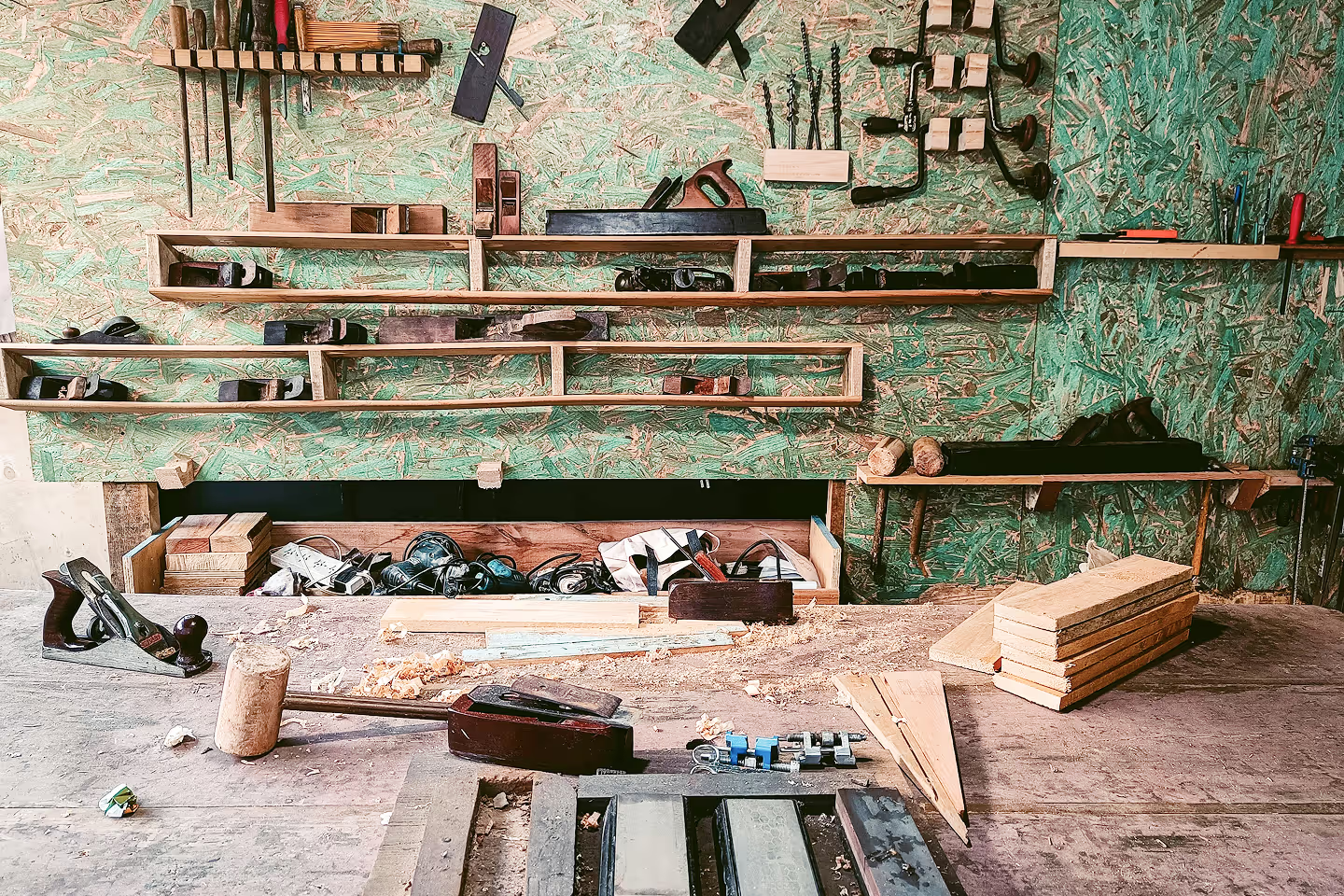
Depending on their condition, the products are then repaired, restored, redesigned, or upcycled. Many of the shops have their own workshops directly in the center. Furniture is restored or redesigned, clothing is cleaned, adjusted, or creatively altered, and electronic devices are technically checked and refurbished. In some cases, materials are also completely recombined and transformed into new products. Only after this refurbishment are the items put back on sale.
How sales work in the ReTuna shopping center
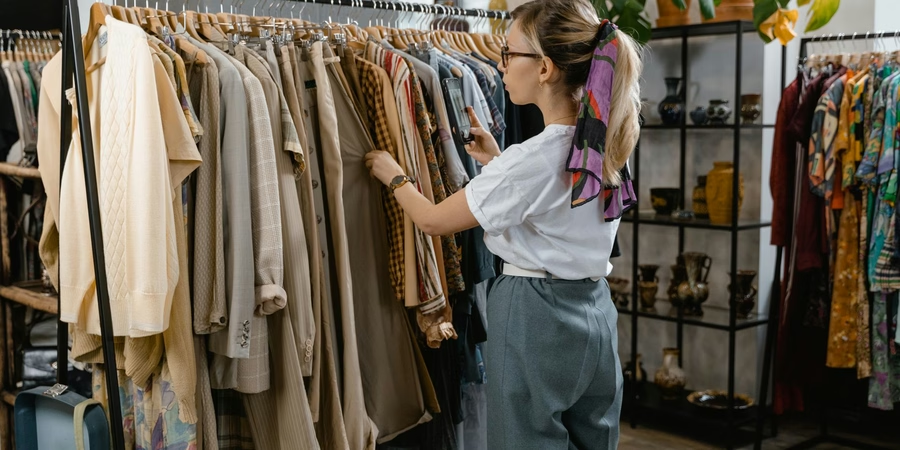
The sales process follows the same principles as in traditional retail. Products are curated, rearranged, and offered in thematic assortments. Furniture, for example, is displayed in staged living environments, clothing is arranged on racks by size and style, and electronic devices are tested and presented as fully functional.
For visitors, this creates a full retail shopping experience that hardly differs from a conventional shopping mall. Customers walk through the stores, compare products, and make purchase decisions directly on site. The difference is that every product has already had a previous life and has been made market-ready again through repair, refurbishment, or upcycling.
This is exactly where the core idea of the concept lies: reuse is not presented as a niche solution or compromise, but as a normal part of retail, where products with a history are sold just as naturally as new goods.
Why ReTuna works economically
ReTuna is not just a sustainability project, but also a functioning economic model. The shopping center shows that reuse is not only an ecological concept, but can also generate concrete economic effects.
- Creation of new jobs: Around 50 jobs have been created through repair, refurbishment, logistics, and retail, many of them in areas such as craftsmanship, sorting, and sales. Activities that rarely exist in a classic linear consumption model become a permanent part of the local economy here.
- Local value creation: Many of the steps, from sorting to repair to sales, take place directly on site. Instead of outsourcing value creation to global production chains, a larger share of economic activity remains within the region.
- Economic resource: Products that would otherwise be discarded are made sellable again through repair, refurbishment, or upcycling and monetized once more.
The model shows how second-hand can be integrated more strongly into traditional retail. Resale is not organized as a niche market, but as a regular part of a shopping center. For customers, resale becomes a normal shopping option alongside new goods, rather than an alternative on the margins of the market. More about the economic effects and the concept is also described in a contribution by the World Economic Forum.
What brands can learn from this
ReTuna shows a fundamental dynamic in retail: The secondary market will emerge anyway. Products do not disappear from the market after the first sale, but reappear on second-hand platforms, in local shops, or in private resale. The crucial question for brands is therefore not whether a secondary market exists, but who profits from it and who retains the customer relationship.
If brands build their own take-back, refurbishment, and resale structures, they can actively steer this second product phase. This creates additional revenue streams from B-stock, returns, and used products, while also generating new touchpoints with existing customers.
Implementing resale with koorvi
The second life of a product is not purely a sustainability topic, but a business model. This is exactly where we at koorvi come in. We help brands take back products, refurbish them, and resell them through their own resale channel—brand-compliant and scalable, instead of leaving the secondary market to external platforms.