Summary

The Market Signal: Resale Becomes Infrastructure
The resale boom is not new. What’s new is how the market is structuring itself. Resale is fragmenting into clearly defined models: large marketplaces, specialized category players, brand-owned programs, and integrated buyback approaches. That structural shift is what makes it strategically relevant for retailers.
Online resale has been outpacing the broader apparel market for years and is projected to reach around $40 billion by 2029 . This is no longer a side segment. It is becoming a structural component of modern retail logic.
The Core Retail Problem
Value leakage typically happens in two places: before the first sale through overstock and markdowns, and after the first sale when the secondary market operates outside the retailer’s control. Products are being resold. Just not within the retailer’s own system. As a result, critical levers are lost: price anchors are set externally, customer data remains inaccessible, and potential repeat-purchase triggers disappear. Resale will happen regardless. The real question is whether that value creation sits inside the business model or outside of it.
What Is Changing for Retailers Now
1. Resale Becomes Part of the Business Model
Resale is no longer an add-on. It is becoming infrastructure. It integrates into loyalty programs, appears directly in checkout, reshapes returns processes, and activates upgrade communication in defined cycles. The shift is one of mindset: not campaign-driven, but process-driven. Once trade-in, store credit, and resale are systematically embedded, a recurring revenue engine emerges. A one-time sale becomes a frequency model.
2. Specialists Provide the Blueprint
The first wave of marketplaces proved demand and volume. Profitability, however, remains operationally complex, every item is unique, every process has a cost. The second wave is more focused. It concentrates on categories with stable residual values, clear demand, and lower complexity in grading and pricing. For retailers, this means not every assortment is equally suited. But durable, value-stable products with natural upgrade cycles are powerful margin levers. That’s where resale becomes predictable. And strategically relevant.
3. Resale as an Operational Retail Standard
Decathlon: Resale as an Integrated Retail Function
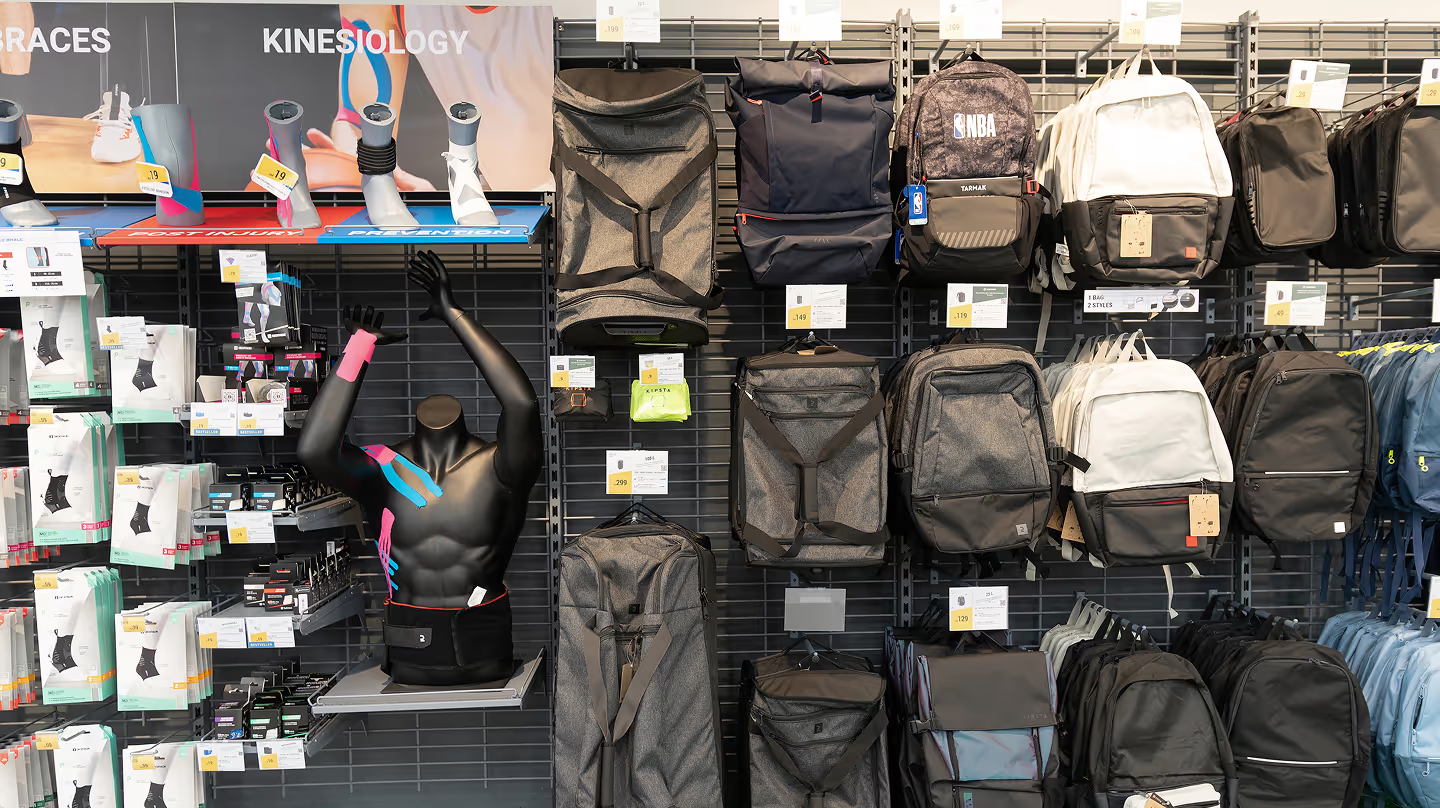
Decathlon operates buyback, refurbishment, and second-life directly within its own retail environment. Not outsourced. Not positioned as a campaign. But embedded as an operational component of the business model. The objective is clearly commercial: liquidate inventory, retain price-sensitive customer segments within the ecosystem, and actively manage upgrade cycles. Especially in categories like sports equipment with natural usage cycles, this creates recurring traffic. Buying back increases the probability of selling again.
Tchibo: Resale as a Frequency and Margin Lever
Tchibo integrates resale elements into its broader retail logic, deliberately extending the product lifecycle. Products remain in circulation longer, additional touchpoints emerge throughout usage, and the brand strengthens its positioning. The transferable mechanic is clear: resale is not treated as an image play. It is understood as a commercial lever, for higher frequency, better inventory utilization, and additional revenue potential.
How Resale Works Operationally for Retailers
From a retail perspective, a clear economic lever emerges: each unit can generate revenue a second time, store credit measurably increases repeat purchase rates, and predictable product returns improve inventory management and forecasting. At the same time, the secondary market delivers valuable data on residual values, price elasticity, and product quality — real pricing intelligence. Buyback leads to store credit. Store credit leads to the next purchase.This is not a sustainability initiative. It is systematic frequency management.
Why Retailers Should Act Now
Resale must now be systemically integrated into shop, loyalty, and returns processes — otherwise the value creation remains external. Those who do not control it themselves hand over pricing power, data, and repeat-purchase triggers to third parties. Integration determines margin and customer retention. Digital product passports make clear authentication easier and significantly reduce manual inspection effort. At the same time, trade-in is shifting from a nice-to-have to a standard expectation in checkout, as customers increasingly factor resale value into their purchase decisions.
Want to launch your own re-commerce program? With koorvi, we implement your branded resale.