Summary
The EU is realigning the textile system. At the center are two major goals: less waste and significantly more durable products. These policy shifts change not only ecological conditions but also the business logic across the entire industry. Every stage of the value chain will become more closely interconnected because product quality, material decisions, and data will in the future need to be verifiably traceable throughout.
Currently, a substantial portion of textile value is being lost: unused returns, excess inventory, B-stock without structured marketing, as well as aftermarket flows that operate largely without transparency. Around 60% of discarded textiles from the EU still end up in export channels with limited visibility regarding quality, recovery, or social effects in the receiving countries. With the new guidelines, companies are expected to consider the entire life cycle of their products.
The Key EU Requirements Driving the Transition
Four policy instruments define how textiles will be designed, documented, recovered, and traded in the future.
- Ecodesign for Sustainable Products Regulation (ESPR)
The ESPR mandates higher durability, better repairability, and fewer fiber blends. For textiles, this means more robust designs and clearer material structures that make reuse and recycling easier from the outset. - Digital Product Passport (DPP)
The DPP links each product to data on materials, origin, and repairability, creating—for the first time—EU-wide transparency that makes sorting, resale, and recycling more efficient. - Extended Producer Responsibility (EPR)
EPR systems make companies responsible for the collection, sorting, and recovery of their products; more sustainable designs pay less, while products that are difficult to recycle pay more—a clear economic incentive for better quality. - Waste Shipment Regulation (WSR)
The WSR tightens controls on the export of textile waste and ensures that only textiles that can actually be recovered are sent to third countries—for greater transparency and fewer social and environmental follow-on costs.
Together, these instruments create a regulatory system that makes circularity planable and economically manageable; the new requirements will come into force in stages.
Economic Impacts on Companies
The new requirements are changing cost logic in design: more durable materials and clearly separable components do increase unit costs, but they reduce returns, extend usage cycles, and lower EPR fees. Robustness thus becomes an economic advantage that stabilizes margins and makes companies less vulnerable to price fluctuations in the supply chain.
At the same time, clear socio-economic effects emerge: Only recoverable products remain cost-efficient, shifting the competitive basis toward quality and material clarity. This strengthens companies that invest in high-quality, circular designs and weakens low-price models that rely on rapid volume turnover. In parallel, fields of activity in collection, sorting, and recycling are growing, creating new local jobs and bringing value creation back into European markets.
With the Digital Product Passport, second-use becomes planable. Companies can specifically manage which products are suitable for resale, repair, or recycling and generate new revenue layers from this. At the same time, value creation shifts from opaque exports and informal structures into regulated, local systems.
Overall, companies gain efficiency, predictability, and additional value streams, while entire market structures evolve toward quality, transparency, and local circular activities.
How the Situation Is Changing in Production Countries
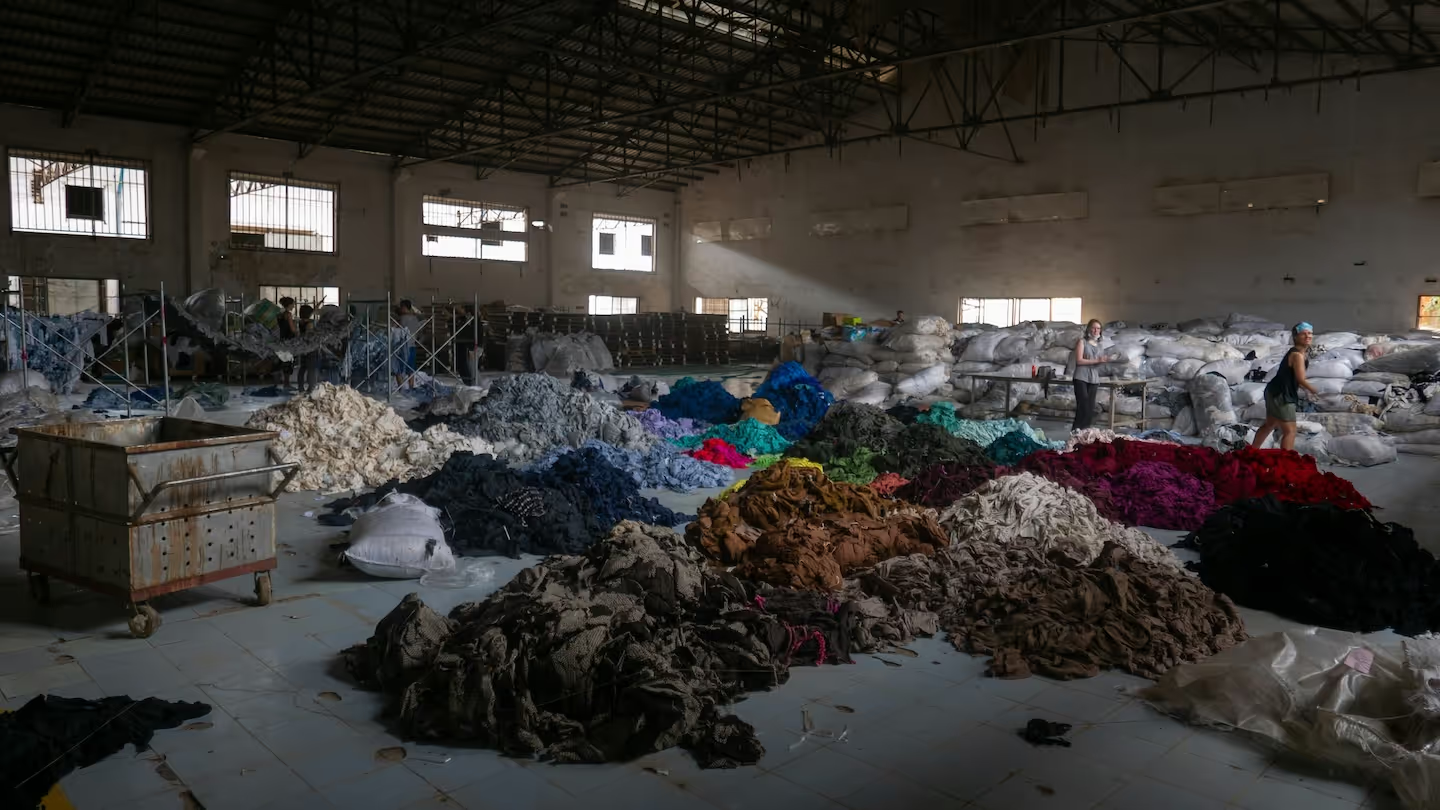
The EU requirements increase pressure on production countries such as Bangladesh and Ghana: more robust materials, higher recycling shares, and strict transparency obligations make existing production models more expensive and more complex. This can dampen exports and increase adjustment costs. This can put informal workers under pressure—in Bangladesh, for example, through scarcer “jhut” material, meaning post-industrial textile remnants that represent a central source of income for many workers, and in Ghana through changing secondhand flows.
The Digital Product Passport intensifies transparency requirements: working conditions, waste streams, and supply-chain practices become more visible—with the potential for better standards but also more compliance pressure. Without support, exactly those groups risk losing income that currently shoulder the majority of value creation. The EU is setting new standards; production countries must follow. If the transition succeeds, more stable structures, safer jobs, and long-term more competitive supply chains can emerge.
How Circularity Works in Practice
A future product life cycle according to EU logic:
- Design: durable construction, clear material separation.
- Production: documented material and chemical information.
- Sale: linking the product to a DPP data record.
- Use: repairability supports a longer product lifespan.
- Take-back: products return to the cycle through take-back systems or EPR.
- Sorting: automated by quality, material, resale value.
- Resale: B-stock, refurbished, or in recommerce.
- Recycling: when resale is not possible.
This creates a system that makes the value of a product usable across multiple cycles.
Circular Textiles – What You Should Do Next
The EU is setting the framework for durable design, transparent product data, and mandatory EPR systems. This creates a clear mandate for companies: assess their own circularity status, expand material and data transparency, and understand early on how sorting, reuse, and recycling can function economically. Since many details of the Ecodesign requirements, the DPP, and the EPR design are still under consultation, it is worthwhile to get involved actively. A positive frontrunner is Nudie Jeans – but what about your company?
Take our Circularity Check to assess your company’s readiness for the circular economy and to learn how we can help you achieve profitable sustainability.