Summary
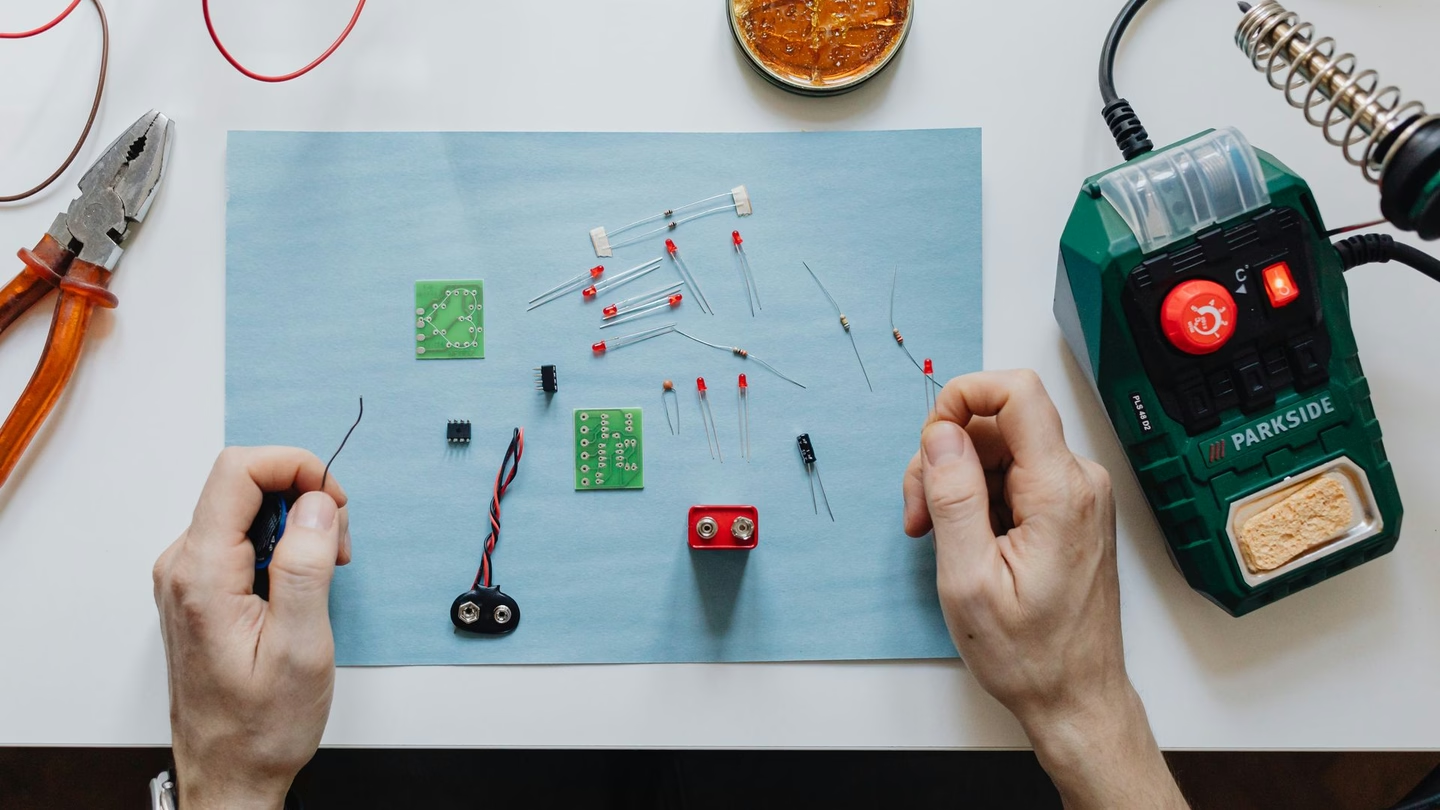
Parkside, the tool brand of discounters Lidl and Kaufland, is Europe's best-selling DIY brand by retail revenue, according to Euromonitor International. Drills, lawnmowers, pressure washers, routers, all on the supermarket shelf. Premium manufacturers answer with the same argument every time: higher quality, therefore higher price. The problem is that this argument matters less and less to the customer. This article shows why premium brands no longer win the price race, which calculation they can win instead, and why an own tool buy-back is the underrated lever for it.
Parkside wins the math, not the quality test
It is not the technically best product that wins a market, but the one with the clearest value calculation. That is exactly where established brands struggle. When a DIYer gets 80 percent of the performance for 30 percent of the price with a Parkside machine, the decision is made quickly. The brand becomes secondary.
The numbers back this up. Parkside started in the 1990s as a cheap private label of the Schwarz Group and is the market leader across Europe today. The German power tool industry, by contrast, generated around 2.4 billion euros in 2023, a drop of ten percent year on year. Both DIY chains and premium brands are under pressure, while Lidl and Aldi attack the sector head on.
Anyone still talking about tradition and engineering here is fighting on the wrong field. The price race is lost. The question is which calculation premium brands open up instead.
Quality is a promise. Residual value is a number
The only answer to a price calculation is a better calculation, not a better claim. Premium manufacturers sell durability, but durability stays abstract for the customer as long as it is only an advertising promise. It becomes a paid advantage only when it is on the table as a number: as resale value.
And this is exactly where the difference becomes measurable. A Parkside drill has practically no residual value after three years. A comparable professional tool keeps a significant share of its value, because it gets repaired, reused and resold. Tools sit unused up to 60 to 70 percent of the time and are still traded multiple times. On platforms like eBay this creates liquid markets with discounts of 30 to 70 percent, as we covered in Second-Hand Tools: Where Circularity Meets Margin.
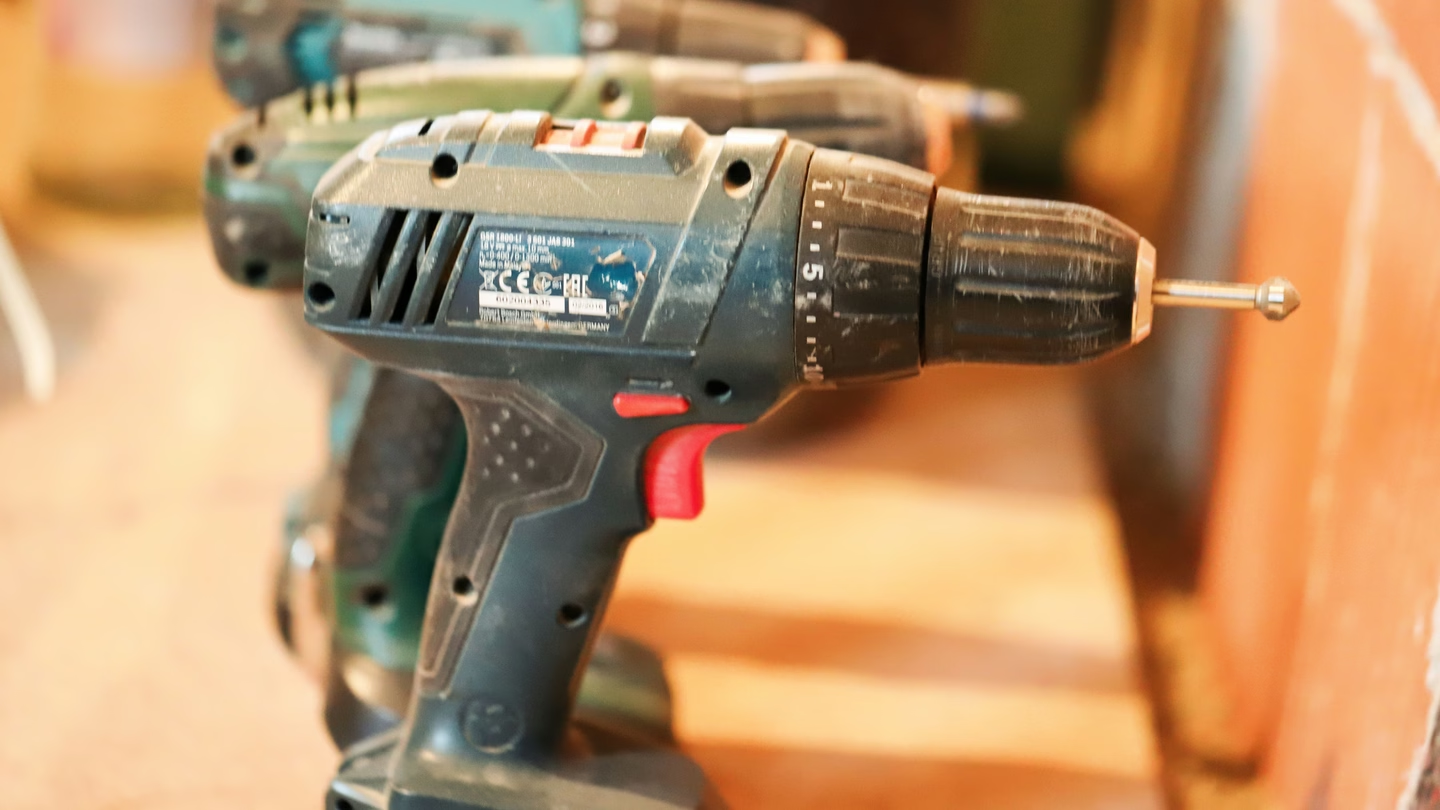
That is the good news for premium brands. Their tools have a residual value that discounter goods do not. The bad news: right now the second market collects that value, not the brand.
Festool shows how: tool buy-back as a brand strategy
Festool shows how a premium brand reclaims its own residual value instead of leaving it to eBay. Through the Festool Refurbishment program you can trade in your used tool and receive the calculated cash value as a voucher for a new Festool device. Festool overhauls the old tool in its own service department and resells it as a refurbished product. This is tool buy-back, trade-in and refurbishment in one program. For the basics, see What Does Trade-In Really Mean.
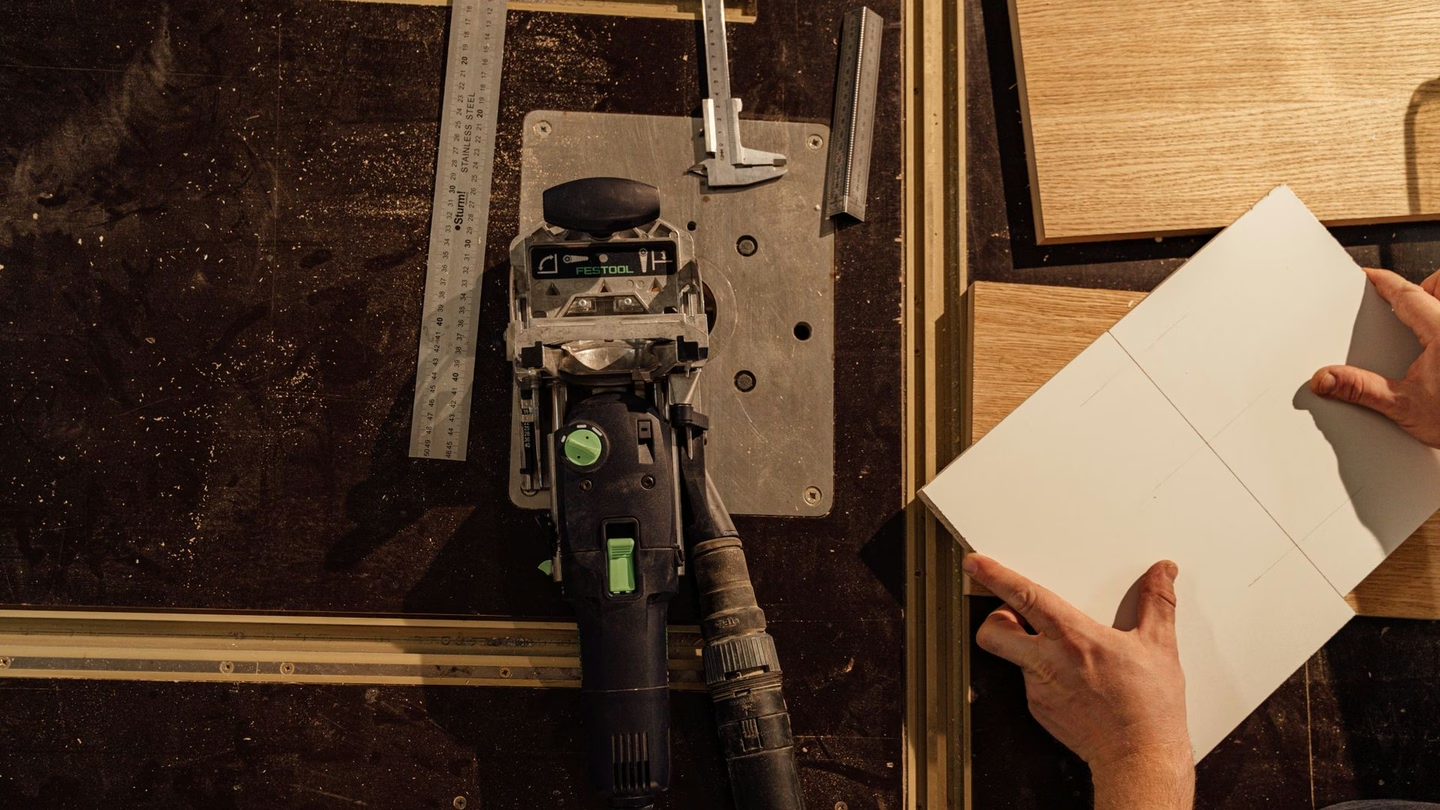
The mechanism is well thought out. Tools up to ten years old are accepted, currently plunge saws and routers, with an expansion announced. The customer gets a shipping label, sends in the device, and the voucher ties them directly to the next new purchase.
This proves the thesis of this article in practice. The buy-back turns the abstract quality promise into a concrete voucher amount. Durability becomes currency. A discounter brand cannot credibly copy this, because its tools are not built for multiple life cycles.
Where Festool still gives away control
As strong as the buy-back is, Festool gives away part of the margin on resale. The refurbished devices are sold via Refurbed.de, that is a single third-party channel. The trade-in belongs to the brand, the second transaction partly to the platform.
This has consequences. Selling only through one marketplace means handing over part of the margin, the pricing, the customer data and the direct customer relationship. On top of that comes the limit to two product categories. Most of the potential of the brand's own residual value stays untapped.
Marketplaces like Refurbed are not a mistake, on the contrary, they are valuable reach. The point is the combination: a single third-party channel is not enough if the brand really wants to control the second market.
How to reclaim the second market
The decisive step is to integrate the second life cycle into your own business instead of leaving it to the market. Concretely: trade-in and tool buy-back through your own portal. Refurbishment with defined quality tiers. And resale across several channels, that is your own brand storefront plus third-party platforms like Refurbed or eBay.
The economic effect is direct. A tool is no longer sold once, but monetized across several cycles, without additional production cost. At the same time, resale becomes a new customer channel: a large share of buyers come into contact with a brand for the first time through a used, tested device. Whoever controls the resale also controls this first contact.
This is exactly where koorvi comes in. koorvi gives brands the end-to-end infrastructure for trade-in, refurbishment and multi-channel resale: a trade-in portal, refurbishment, automation and a dashboard that makes cost, conversion and margin visible. This turns branded resale from a side project into a profitable channel in its own right.
Conclusion
The price race against Parkside is lost, and it was never winnable. In return, premium brands have an asset that discounter goods lack: a real residual value across several life cycles. With its tool buy-back, Festool shows that this residual value translates into revenue and customer loyalty. The next step is not to hand resale to a single marketplace, but to control it yourself with resale as a service. If you want to know what an own resale program could look like for your tool brand, talk to koorvi.