Summary
The EU is turning what was once an image issue into a clear compliance requirement, including reporting obligations, exceptions, and transition periods. For many brands, this means restructuring processes. For strategically minded companies, it means unlocking new revenue streams.
What exactly does the destruction ban regulate?
The legal basis is the Ecodesign for Sustainable Products Regulation (ESPR) of the European Union. As of July 19, 2026, large companies may no longer destroy unsold clothing and footwear. Medium-sized companies will follow in 2030, while small companies are currently exempt. In addition, disclosure obligations apply from 2027: companies must transparently report how they handle unsold goods, what quantities are affected, and for what reasons products were nevertheless disposed of. These disclosures will be standardized and therefore traceable for the market, the public, and competitors.
Exceptions are narrowly defined, for example in cases of safety risks or when reuse is technically impossible. Important: EU law applies directly. Companies in Germany do not require a national implementation law to be affected. The regulation is binding.
What does the status quo look like in the fashion industry?
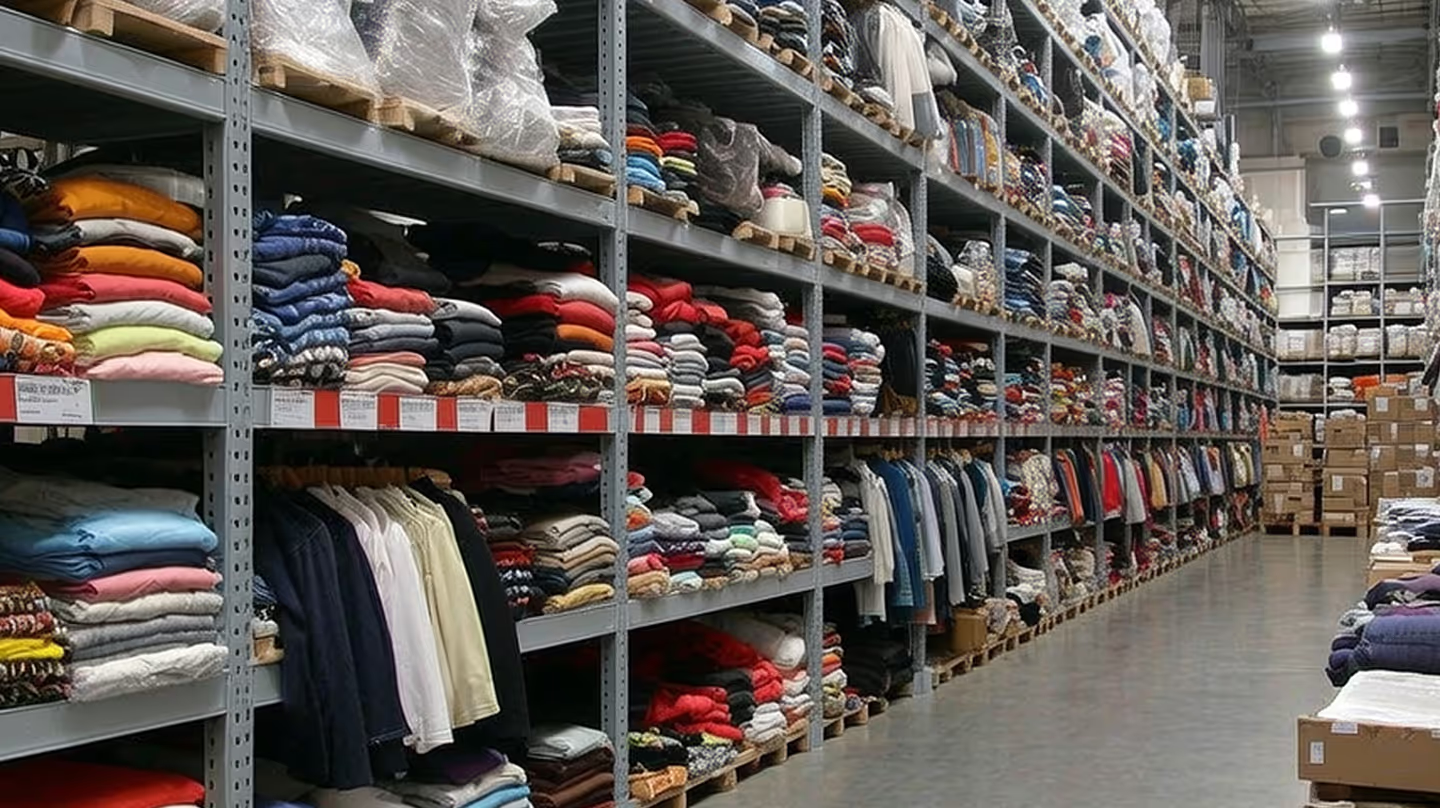
In the fashion industry, excess inventory is not the exception but the rule. Unsold goods, returns, and B-stock are a fixed part of financial planning and were long accepted as unavoidable by-products. Writing off, discounting, or ultimately disposing of goods were considered pragmatic solutions.
However, this practice is now under regulatory and economic pressure. According to EU estimates, 4–9% of unsold textiles were destroyed before they were ever worn.
At the same time, a second problem emerges: products do not simply disappear from the market. Through clearance dealers, intermediaries, returns processors, or international liquidation platforms, these inventories re-enter circulation. What is considered “cleared” internally reappears externally. For companies, this means margin, customer data, and strategic control are lost while third parties profit from their goods.
What does this specifically mean for companies?
Operational consequence: Writing off is no longer enough
Destruction was long the fastest way to remove inventory from the books. That option disappears or at least becomes subject to justification. Companies now need viable alternatives that are reviewed, documented, and economically sound. What used to be an operational “clean-up process” becomes a strategic decision about secondary marketing, refurbishment, and reintegration into sales. What was once a cost center becomes an active inventory management responsibility.
Strategic consequence: Inventory becomes a performance issue
Excess inventory is no longer purely a logistics topic but directly affects margin, capital tie-up, and brand management. Unsold goods tie up capital that cannot be used elsewhere, while simultaneously offering the opportunity for additional revenue and new customer touchpoints throughout the product lifecycle. From 2027 onward, companies must also disclose how they manage these inventories. Transparency thus becomes part of brand perception, internally and externally. Those who think only in terms of disposal lose not only goods but entrepreneurial opportunity.
What Should Now Happen with Excess Inventory
The law does not only force companies to avoid destruction, but to actively decide on the future value path of their goods.
Own Recommerce Channel in E-Commerce
Instead of losing products to clearance dealers or third-party platforms outside of your sphere of influence, a dedicated resale section can be integrated directly into the online shop. This creates an additional revenue stream without new production and without additional sourcing costs. Pricing, brand presentation, and customer data remain within the company’s own system. Recommerce therefore becomes not a side project, but a controlled extension of the existing business model.
Systematically Monetize B-Stock
Not everything is A-grade. But almost everything is sellable. Returns with minor defects, seasonal leftovers, sample goods, or overproduction do not need to be written off if they are properly categorized and differentiated in the offer. With clear condition grading and transparent pricing logic, new contribution margins can be generated from goods that were previously recorded as losses.

Buy-Back & Trade-In Programs
Buy-back programs create predictable product flows and extend the customer relationship beyond the initial purchase. The mechanism is simple: return in exchange for a voucher, voucher redemption with a higher basket value, resale of the returned products. This creates additional touchpoints along the entire product lifecycle, strengthening brand loyalty and increasing repurchase rates. Through these recurring interactions, the customer relationship is measurably extended and Customer Lifetime Value increases sustainably.
The Strategic Shift: Taking Control of the Secondary Market
Especially in the fashion industry, now is the moment to rethink. Those who actively manage the second life phase unlock additional revenue from existing inventory, create predictable return flows, and reduce dependence on new production. The destruction ban increases pressure, but above all it makes visible where value has previously been left untapped. Those who do not implement a structured recommerce model now continue to leave market share and margin to third parties.
Do you realize that now is the time to act? With koorvi, implement branded resale for your brand in a scalable and brand-compliant way.