Summary

Why Fashion Needs Take-Back Systems Now
The textile industry has a volume problem. In the past two decades, global clothing production has doubled, while usage per item has dropped dramatically. As a result, mountains of barely worn garments end up in landfills or are burned — often within a year of purchase.
Take-back systems offer a way out of this throwaway model. By collecting used textiles directly from customers, brands can close the loop on their own products and start taking responsibility for what happens after the point of sale.
At a time when customers are demanding transparency and regulators are setting stricter rules, the message is clear: if you sell it, you’ll soon be expected to take it back.
What a Take-Back System Really Is
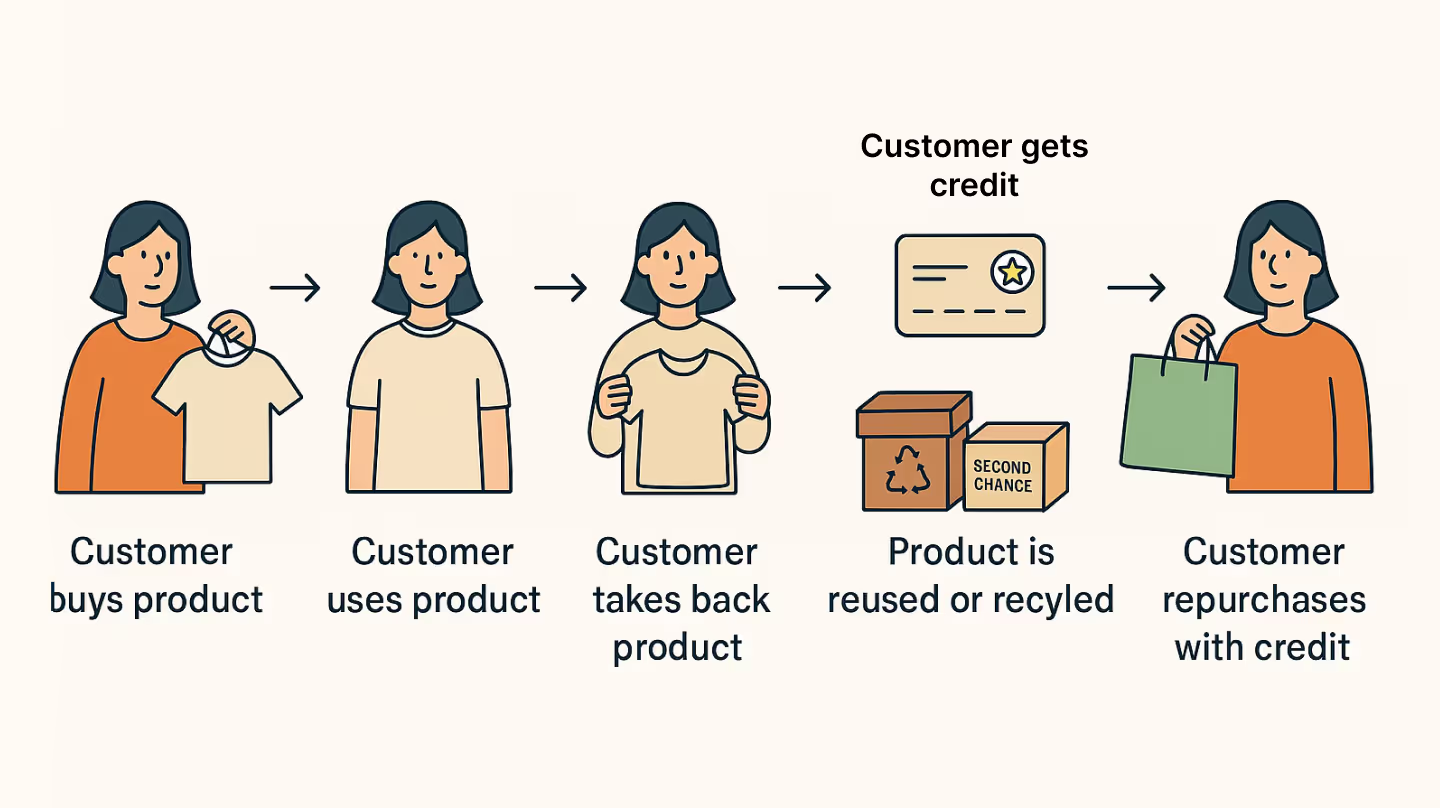
A take-back system is more than just a donation bin in the store lobby. At its core, it’s a structured process that allows customers to return used textiles — ideally in exchange for store credit or rewards — and ensures those items are evaluated, sorted, and returned into circulation.
This can take many forms. Garments in good condition may be refurbished and sold secondhand. Worn-out items may be downcycled into insulation or cleaning cloths. In some cases, the fibers are recycled back into new garments.
The more data-driven the process, the more value a brand can extract. And the more seamless the customer experience, the more likely it is to scale.
From Patagonia to H&M: Who’s Doing It Already
Several fashion brands have turned take-back systems into brand assets — and business models.
Patagonia’s Worn Wear program invites customers to return used items in exchange for store credit. The garments are repaired, cleaned, and sold as secondhand — reinforcing the brand’s durability-first identity. You can shop used Patagonia products .
H&M, one of the earliest adopters, placed textile collection boxes in stores across the world. Collected garments are sorted into reuse, recycling, or downcycling streams. Though the program has faced scrutiny, it has also raised mainstream awareness of fashion’s waste problem. Their slogan: Let’s close the loop
MUD Jeans built take-back into their entire model. Customers lease jeans instead of buying them, and return them at the end of their use phase. The brand then recycles the fibers into new denim — creating a true circular loop.
Even sportswear companies are joining in. Adidas, for instance, has piloted programs that collect used apparel and shoes to be broken down and remade into new performance wear.
Behind the scenes, startups like koorvi are helping brands manage the logistics — providing the digital infrastructure, connecting with the right refurbishment and recycling partners, and tracking data for each product’s next life.
So What’s the Catch?
Take-back systems work — but only when supported by the right infrastructure. And that’s where many brands hit a wall.
The biggest challenges?
- Sorting returned textiles at scale is messy, costly, and labor-intensive.
- Most items aren’t designed to be disassembled or recycled in the first place.
- Many brands don’t disclose what happens to returned items — undermining trust.
- And the economics are often tight: logistics, processing, and communication require upfront investment before savings or new revenue materialize.
There’s also the uncomfortable truth that a large share of collected clothing is exported — sometimes to countries with little capacity to manage the waste. This creates not only environmental harm, but reputational risk.
Why Regulation Will Change the Game
Until now, most take-back systems have been voluntary. But that’s starting to change.
France has already made extended producer responsibility (EPR) mandatory for textiles. Brands must now finance the collection and processing of their products post-use.
The EU will follow, with requirements expected across member states by 2027.
In California, new legislation is pushing in a similar direction.
That means the clock is ticking. Brands that prepare early won’t just avoid compliance headaches — they’ll gain a competitive advantage by building efficient systems ahead of the curve.
A Better Way to Run Take-Back — with koorvi
Designing a take-back system in theory is one thing. Implementing it across digital channels, physical returns, sorting, and resale is another.
That’s where koorvi comes in.
We support fashion and textile brands with the digital backbone they need to turn take-back from a sustainability goal into a working system. From branded return portals to product condition tracking, automated sorting flows, and integration with resale and recycling partners — koorvi enables scalable, circular operations.
Every item is tracked. Every return creates insight. And every process is designed for efficiency, not complexity.
A Second Life Is Good for Business
The future of fashion is circular. But circularity doesn’t start with recycling — it starts with taking responsibility.
Take-back systems help brands close the loop on their own terms. And in doing so, they gain more than environmental credibility — they build new touchpoints with their customers, reduce dependency on raw materials, and future-proof their operations.
The brands that lead in this space won’t be the ones with the most collection bins. They’ll be the ones that know exactly what comes back — and what to do with it.
👉 Curious what a smart take-back system could look like for your brand? Let’s talk.