Summary

Reverse Logistics: Not Just for Returns Anymore
In its most basic form, reverse logistics is the process of moving products backward through the supply chain — from the customer back to the seller or manufacturer.
But let’s be honest: for years, it’s been treated like a necessary evil. A way to deal with refunds, damaged goods, and shipping mishaps.
That’s changing.
Today, reverse logistics is where circularity begins. It’s how companies take back products for resale, refurbishment, or recycling — and how they keep customers coming back through loyalty-driven trade-in programs.
The message is clear: a return isn't the end of a sale — it’s the beginning of the next one.
IKEA, Apple & Co: Returns as a Business Model
Reverse logistics isn’t just for small-scale refurb shops. Some of the world’s biggest brands are building full-fledged systems around it:
- IKEA’s Buy Back & Resell Program lets customers return used furniture for store credit. These items are then cleaned, evaluated, and resold in the Second-Chance Market — creating a profitable resale stream and lowering raw material dependency. (Read our deep dive here)
- Apple’s Trade-In Program turns old iPhones into revenue and new customer relationships. It’s one of the most efficient reverse logistics operations in the world — powered by automation, robotics, and resale infrastructure.
These aren’t marketing stunts. They’re strategic systems built for scale — and for sustainability.
How Reverse Logistics Builds Loyalty
The economics of reverse logistics are compelling. But the real magic happens when it's paired with customer experience.
Let someone return an old product. Give them store credit. Offer a smooth return flow. They’ll be back — and they’ll remember you.
Trade-in programs are proving especially powerful:
- They extend customer relationships beyond a single purchase.
- They reduce price sensitivity for new products.
- They turn sustainability into something tangible.
It’s not about guilt — it’s about giving value back.

The Software Behind It All
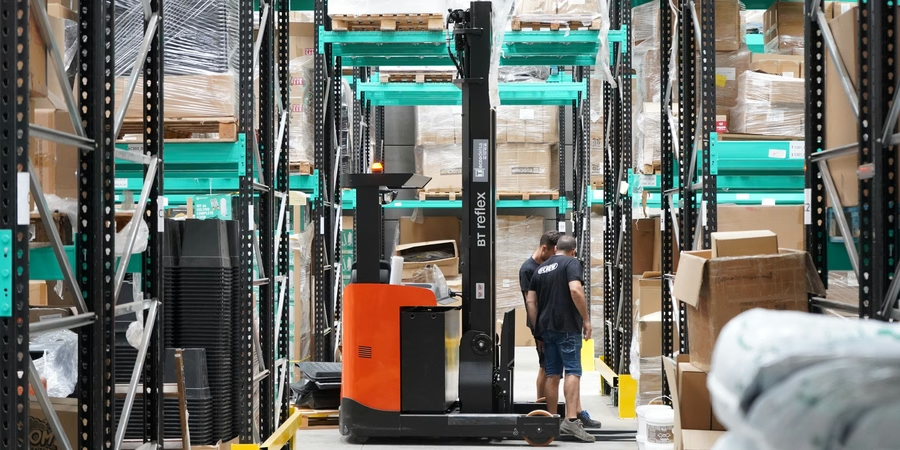
Making reverse logistics work isn’t just about warehouse space and forklifts. It’s about smart systems. Here's who’s powering the infrastructure:
- IFS: Offers full lifecycle reverse logistics and repair tracking.
- FarEye: Focuses on optimizing last-mile and reverse logistics for sustainability.
- ReverseLogix: A dedicated returns management system for end-to-end visibility.
- Optoro: Specializes in re-commerce through AI-powered returns and resale.
And then there’s koorvi — bringing something new to the table. Click here for more info.
While traditional platforms focus on returns and asset recovery, koorvi enables companies to launch, automate, and scale trade-in programs. That means:
- More resale.
- More reuse.
- More customer interaction.
- And a lot less waste.
It’s reverse logistics designed not just to reduce loss — but to increase lifetime value.
What About Recycling?
Let’s not forget that recycling is part of the loop too. In well-run reverse logistics systems, products that can’t be resold or refurbished are harvested for materials.
But here's the catch: the goal isn’t to get to recycling. It’s to delay it as much as possible — through reuse, trade-ins, and second-hand sales.
Recycling is the safety net. Not the strategy.
What to Watch: AI, Automation & Regulation
As reverse logistics grows, so do the tools around it:
- AI is being used to predict resale value, route returned items efficiently, and sort products by condition — automatically.
- Automation is speeding up everything from return approvals to warehouse sorting.
- And regulation is looming. Especially in Europe, where brands will soon be held accountable for end-of-life product management.
The companies that prepare now — with flexible, transparent systems — will have a head start.
How koorvi Helps Companies Get Ahead
You don’t need to be IKEA to launch a smart return or trade-in model.
With koorvi, you can:
- Build branded return portals
- Automate product evaluation
- Connect to resale or recycling partners
- Track every product across its second life
- Reward customers with credit — instantly
Reverse logistics doesn’t need to be a back-office headache. With the right tools, it becomes a front-line engine for growth.
Reverse Logistics Is the Future of Value Recovery
In a world where resources are tight and customer loyalty is gold, reverse logistics is stepping out of the shadows.
It’s not just about getting stuff back. It’s about building systems that give it — and your customers — a second chance.
👉 Curious how your brand can make reverse logistics work? Let’s talk