Summary

In the quest for a more sustainable future, the concept of Extended Producer Responsibility (EPR) has emerged as a key pillar of environmental policy. At its core, EPR represents a paradigm shift in the way we approach product lifecycle management, placing the onus squarely on producers to take responsibility for their products from cradle to grave. Defined as an environmental policy approach that shifts responsibility for a product's lifecycle, including design, take-back, recycling and final disposal, to the producer, EPR represents a fundamental rethink of traditional production and consumption models.
In this blog post, we delve into the intricate workings of Extended Producer Responsibility, exploring its definition, legal framework and implications for the circular economy. From the halls of legislative chambers to the frontiers of industry innovation, EPR is a beacon of hope in our collective efforts to reduce the environmental impact of consumer goods and foster a more sustainable future.
Join us on this journey as we unravel the complexities of EPR, examine its implementation in Germany and other European Union (EU) countries, dissect current and future EU regulations, and present real-world examples of EPR in action. In the end, you'll gain a deeper understanding of the critical role EPR plays in shaping our transition to a circular economy, and discover how you can contribute to this transformative movement.
What’s EPR and which components does it include?
At its core, EPR embodies the principle that manufacturers are responsible for the environmental impact of their products throughout their entire life cycle. This holistic approach encompasses various stages, including product design, manufacturing, distribution, use and, ultimately, end-of-life management.
Key components of EPR include
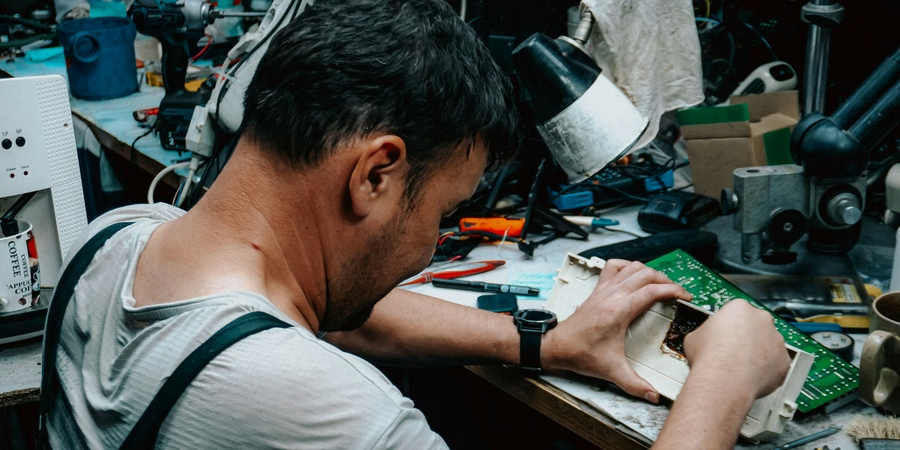
- Product design: Manufacturers are encouraged to design products with longevity, repairability and recyclability in mind. By incorporating environmentally friendly materials and minimizing waste generation at the design stage, manufacturers can reduce environmental impacts and facilitate downstream recycling processes.
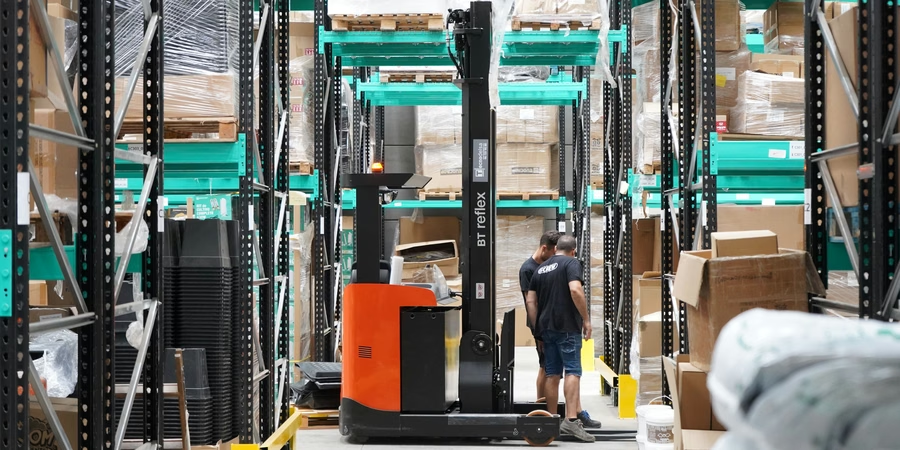
- Take-back systems: EPR requires manufacturers to set up systems for the collection and take-back of their products at the end of their useful life. This may involve setting up collection points, implementing deposit return schemes or working with retailers to facilitate the return and recycling of products.
- Recycling and final disposal: Once collected, products are responsibly recycled or disposed of in an environmentally sound manner. Manufacturers can work with recycling facilities or invest in infrastructure to ensure that materials are recovered and reintroduced into the production cycle, minimizing the use of virgin resources and reducing waste.
By shifting responsibility from consumers and communities to producers, EPR incentivizes eco-design, waste reduction and resource efficiency. It also promotes a more circular economy where products are reused, remanufactured and recycled rather than discarded as waste.
Legal situation in Germany 🇩🇪
Germany has implemented three specific EPR laws. These laws, which are harmonized with the corresponding EU directives, impose crucial obligations on manufacturers to take into account the environmental impact of their products throughout their entire life cycle. Let's embark on a comprehensive exploration of the intricacies of EPR obligations across different product categories and the corresponding legal landscape in Germany.
Understanding EPR: Defining responsibility across product categories.
EPR legislation in Germany casts a wide net, encompassing various product segments:
- Electrical and Electronic Equipment (ElektroG): Covering a spectrum of devices such as computers, smartphones and household appliances.
- Batteries and Accumulators (BattG): Covers both disposable and rechargeable batteries that are essential to modern life.
- Packaging: Covers the packaging materials used for goods sold to consumers, a ubiquitous part of modern consumption.
Each category has its own set of EPR obligations, reflecting the diverse range of products that are an integral part of modern lifestyles.
Deciphering German EPR Laws: A Closer Examination
Let's delve into the legislative framework that operationalizes EPR in Germany:
- ElektroG: This legislation mirrors the European WEEE Directive, mandating manufacturers to reclaim their electrical and electronic products. Concurrently, retailers are tasked with providing consumers convenient take-back options, both offline and online. https://www.elektrogesetz.de/gesetzestexte/elektrog/
- BattG: Battery and accumulator manufacturers must register with competent authorities and engage in take-back schemes. Retailers share the responsibility by accepting used batteries from consumers sans charge. https://www.batteriegesetz.de/gesetzestexte/battg/
- VerpackG: Manufacturers of packaging materials must register with the packaging register LUCID and partake in dual systems for recycling and disposal. Retailers' product sales hinge upon furnishing evidence of compliance with these regulations. https://www.gesetze-im-internet.de/verpackg/
Legal Situation in other EU States
France 🇫🇷
France has the most stringent EPR legislation in the EU, setting a gold standard for sustainable resource management. In addition to the product categories mandated by the EU, France extends its EPR obligations to items such as toys, sporting goods, textiles, furniture and even recreational boats. In addition, the requirements imposed on manufacturers go beyond EU standards, signaling a commitment to robust environmental management. In particular, France made history as the first EU Member State to enact EPR legislation specifically for textiles, underlining its proactive approach to tackling environmental challenges across different sectors.
The Netherlands 🇳🇱
In July 2023, the Netherlands demonstrated proactive leadership in environmental sustainability by independently introducing an Extended Producer Responsibility (EPR) scheme specifically for textiles. Under this initiative, companies are required to register with a legally recognized EPR system and declare the estimated amount of textiles they intend to place on the market. Based on this information, companies are given mandatory recycling targets to ensure responsible end-of-life management. In addition, companies are required to provide collection containers for the deposit of textiles, further promoting a circular economy and reducing waste.
Upcoming EU Regulations 🇪🇺
Extended Producer Reliability for Textiles: The forthcoming Extended Producer Responsibility for Textiles Directive is a landmark development in the EU's efforts to tackle textile waste and promote circularity in the fashion industry. By requiring manufacturers to collect and recycle textiles by 2025, the directive aims to significantly reduce the environmental footprint of textile production and consumption. The directive also signals a shift towards greater accountability by banning the destruction of unsold and returned clothing from 2025. In addition, strict restrictions on the export of textile waste to non-OECD countries underline the EU's commitment to responsible waste management and global environmental protection.
Further information on EU Commission Website: https://ec.europa.eu/commission/presscorner/detail/en/ip_23_3635
Eco-design for Sustainable Products Regulation (ESPR): The Eco-design for Sustainable Products Regulation (ESPR) heralds a new era of environmentally conscious design practices across a range of industries, including fashion. The regulation aims to revolutionize the sustainability credentials of fashion products by providing binding guidelines for eco-design in clothing. By prioritizing factors such as extended product life, the use of durable or recyclable materials, water-saving dyeing techniques and the incorporation of waste materials into fabric production, the ESPR aims to reduce the environmental impact of fashion production and consumption. It also promotes circularity by encouraging practices such as the provision of repair services and second-hand collections, thereby fostering a more sustainable and resource-efficient fashion industry in the EU.
Further information on EU Commission Website: https://commission.europa.eu/energy-climate-change-environment/standards-tools-and-labels/products-labelling-rules-and-requirements/sustainable-products/ecodesign-sustainable-products-regulation_en
Conclusion
In summary, Extended Producer Responsibility (EPR) is an important tool for advancing the circular economy agenda, with notable progress made by Germany, France and the Netherlands in developing strong regulations and proactive initiatives. While complying with EU regulations, Germany's comprehensive EPR framework covers various product categories and lays the foundation for sustainable practices. France and the Netherlands show exemplary leadership with pioneering measures for textiles and sustainable product design, going beyond EU mandates to adopt progressive regulations. France's initiative to independently extend EPR regulations to textiles and the Netherlands' proactive approach underline their commitment to environmental responsibility. Looking ahead, upcoming EU directives such as the Extended Producer Reliability for Textiles and the Eco-design for Sustainable Products (ESPR) regulation promise further progress and will drive sustainability practices across industries. These regulations reflect the EU's commitment to fostering a circular economy and promoting sustainable consumption and production patterns. As countries continue to navigate the complexities of the EPR and embrace innovative solutions, stakeholder collaboration and engagement will be essential in shaping a more sustainable future for generations to come.